Gifu, Japan · The Northern Alps
Shinhotaka Ropeway Guide: Tickets and Planning 2026
Shinhotaka Ropeway is the mountain-view excursion to plan around when staying in northern Okuhida. Choose a day with flexibility, check the operator’s current service information, and organise your return bus before buying tickets. Staying nearby gives you more room to respond to poor visibility than a tightly scheduled day trip.
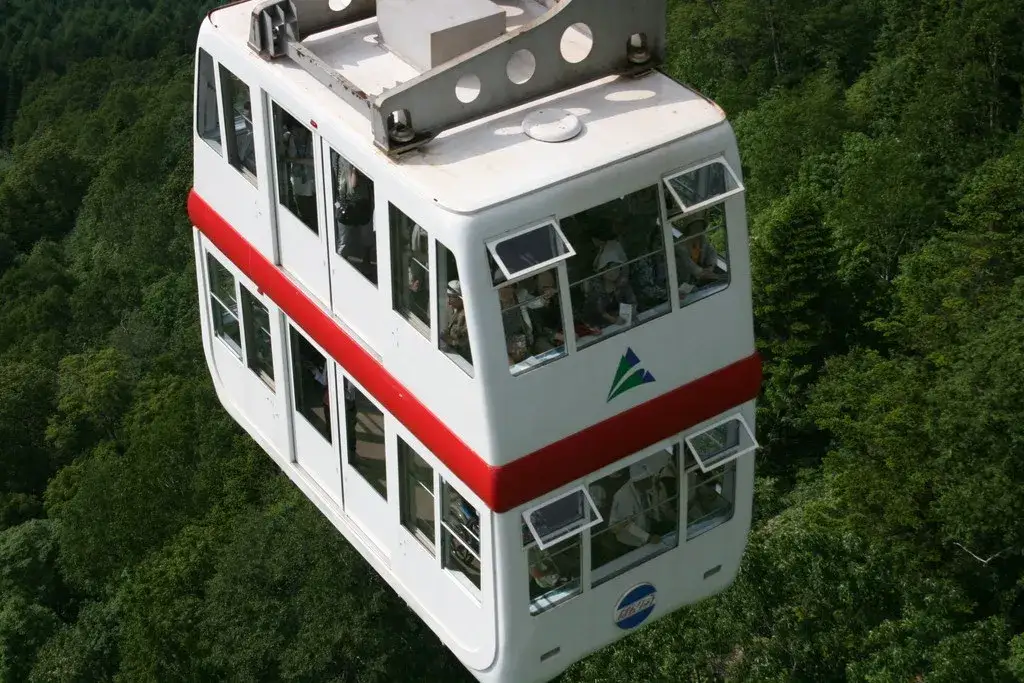
Archive photograph of a double-decker gondola at Shinhotaka Ropeway; it does not establish the current cabin design. · Alpsdake · CC BY-SA 3.0 · Wikimedia Commons · Resized and converted to WebP
Some booking links may earn us a commission at no extra cost to you. How we fund this guide.
Is Shinhotaka Ropeway worth including in an Okuhida trip?
Include the ropeway if mountain views are a main reason for visiting Okuhida and you can accept that the view depends on conditions. It works particularly well alongside a ryokan stay: the excursion supplies the outdoor part of the trip, while the accommodation gives the evening a purpose even if clouds arrive.
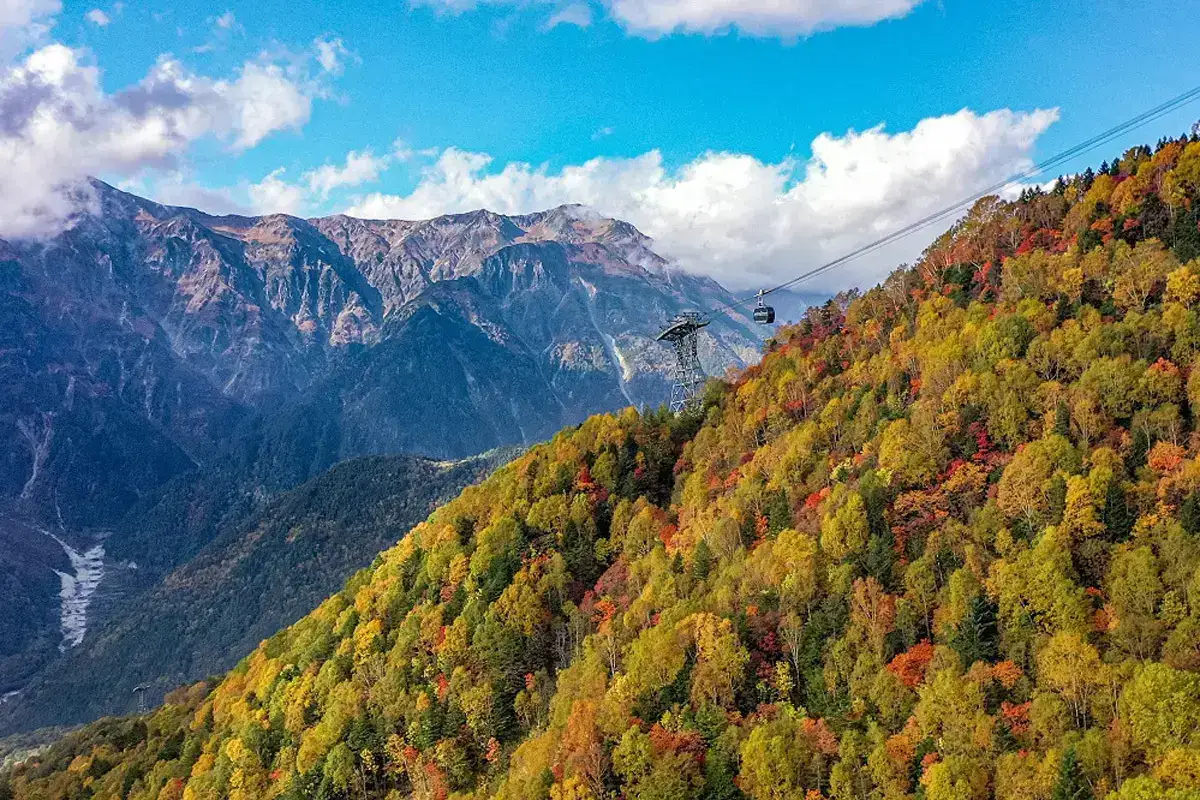
The experience is different from walking through a mountain valley. You travel upward through a changing landscape and view the surrounding Northern Alps from the ropeway facilities. The operator identifies Mount Yari and the Hotaka mountains among the surrounding scenery. Visibility, cloud height and the direction you look all affect what you can identify; do not book on the assumption that every named peak will be visible.
The most useful comparison is with your own priorities. A traveller who wants a short, structured outing may prefer the ropeway to a long walking day. Someone hoping for an extended riverside walk may place Kamikochi first during its visitor season. Neither attraction substitutes for the other, and attempting both between fixed transfers can turn the trip into a sequence of queues.
Start with the Okuhida planning guide if you have not chosen your overnight base. The village you sleep in influences how easily you can change the sightseeing order when the forecast shifts.
How does the two-stage ropeway journey work?
The official route uses the first ropeway from Shinhotaka Onsen Station, a transfer through the intermediate area, and the second ropeway to Nishihotakaguchi Station. Read your ticket’s coverage carefully rather than assuming every ticket option includes both stages and the return journey.
The station names matter when following a map. Shinhotaka Onsen Station is the lower starting point. Nabedaira Kogen Station and Shirakabadaira Station describe the intermediate transfer area, while Nishihotakaguchi is the upper station. Save the operator’s diagram before travelling so that unfamiliar spellings do not make the transfer feel like a separate destination.
Keep your ticket accessible until you have completed the full journey. Put a warm layer, any medicines and your camera in the small bag you carry, rather than relying on access to luggage stored elsewhere. If members of your group move at different speeds, agree on where to meet before entering the boarding area.
A sightseeing ticket is not a mountain itinerary. Paths beyond the managed visitor facilities can involve a very different level of preparation. Do not follow other passengers onto a trail simply because they arrived in the same gondola. Use the operator’s current trail guidance and a route-specific plan for any walk beyond ordinary station sightseeing.
Which ticket should you check before booking?
Check the official ticket page first, then compare any booking platform against the same journey. The important details are the included ropeway sections, travel direction, valid date, redemption procedure and what happens if operations are interrupted; the headline booking label is not enough.
| Choice to compare | Main question | Good planning habit |
|---|---|---|
| Full sightseeing return | Are both ropeways included? | Read the complete route description |
| Single section | Does this reach the viewpoint you want? | Match it to the station diagram |
| Transport bundle | Which bus routes and dates are covered? | Compare coverage with the actual itinerary |
| Priority product | Does it supplement a separate ride ticket? | Check redemption and boarding conditions |
The operator publishes several products and may change their conditions. This guide does not quote ticket amounts or claim that one product is always the better deal. Open the official operating and ticket information for the latest details.
When comparing a bus-and-ropeway package, list each journey you will actually make. A visitor sleeping in Hirayu and a visitor returning to Takayama may need different coverage. Check whether an itinerary change leaves you with an unused inclusion, and whether maintenance affects the product’s availability.
Do not buy a more complicated product solely because it contains extra attractions. Your day still has a return deadline, meal arrangements and weather limits. A simple ticket that fits the plan can be easier to manage than a bundle that encourages you to add stops you did not originally want.
How do you get there from Takayama or Hirayu?
Use the Nohi Bus Hirayu–Shinhotaka route and check the exact destination of the departure you choose. The official route table distinguishes intermediate stops, services with operating-period notes and buses that do not serve every location in the same way.
From Takayama, begin at Takayama Nohi Bus Center beside the railway station and follow a departure that reaches the ropeway stop. From Hirayu, check the onward departure independently instead of treating the bus you arrived on as a guaranteed through service. The Takayama-to-ropeway transport guide explains how to read those choices.
Select your return journey before setting off. Save the timetable in both directions, including any footnotes, and identify an earlier departure you could use if someone becomes tired or the weather worsens. A screenshot of one outgoing row is not enough to manage the afternoon.
If you are driving, follow the operator’s current access and parking instructions. Different car parks serve different parts of the site, and some parking access changes during snow conditions. Do not let a navigation app’s preferred endpoint override a closure notice.
Is it better to stay in Shin-Hotaka, Hirayu or Takayama for the ropeway?
Stay in Shin-Hotaka if the ropeway is the main reason for the trip, choose Hirayu if you also want Kamikochi or the road toward Matsumoto, and use Takayama only if you prefer a city base and accept a day that depends on the bus in both directions. The question is how much flexibility you want when the sky changes, not which place looks better on a map.
A night in Shin-Hotaka lets you treat the ropeway as a decision you make after breakfast. You can look outside, read the operator’s status page and commit only when the plan makes sense. Hirayu works well when the trip also includes a Kamikochi day or a crossing toward Matsumoto, though the ropeway outing then needs its own bus pairing. Takayama is workable for travellers who enjoy city dining and shopping, but the whole excursion sits behind a return departure, which leaves little room for a delayed descent or a longer wait for cloud to clear.
Compare the options through the Takayama-to-ropeway transport guide and the Hirayu village guide before booking beds. If you want a ryokan at the centre of the stay, continue with the Shin-Hotaka ryokan guide.
How much of the day should you leave flexible?
Leave room for the bus journey, boarding queues, transfers, a comfortable visit and an earlier return option. An exact door-to-door duration would be misleading without your departure, accommodation and travel date, so build the plan from the current timetable rather than a fixed estimate.
Work backwards from the latest acceptable arrival at your next destination. A ryokan dinner reservation is a real deadline, while an optional café stop is flexible. Tell the property if you are unsure how much arrival time the route needs; the staff may be able to clarify the correct stop and any collection arrangement, but do not assume a pickup exists.
For a first visit, keep the ropeway as the main excursion rather than the first item in a crowded checklist. You can decide on a smaller additional stop after you see conditions. This protects time for the actual views and avoids rushing through the transfer stations just to remain on schedule.
Groups should decide whether the goal is simply to ride or to linger outside. A photographer waiting for a break in the cloud needs a different margin from someone who mainly wants the gondola experience. Agreeing this beforehand reduces pressure on the slowest member of the party.
What changes in winter and poor weather?
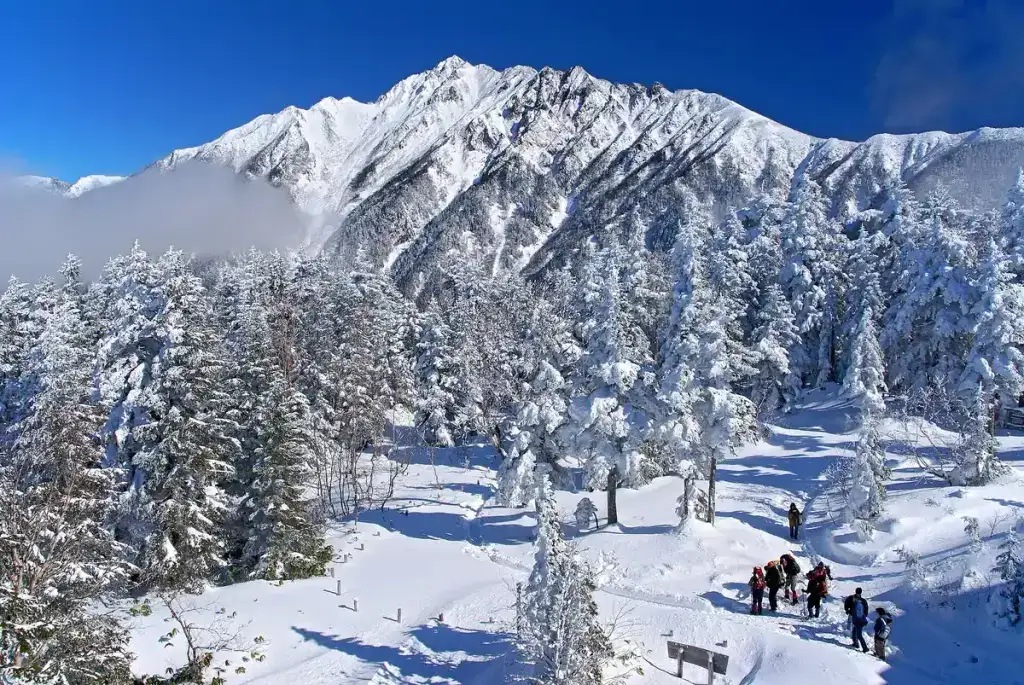
Winter requires preparation for snow, cold and interrupted operations, even when the lower village seems manageable. The operator says wind can suspend the ropeway and directs visitors to its current status information; sunshine at your hotel does not prove the upper section is operating.
Wear footwear appropriate to the surfaces you will encounter, carry gloves and use layers that can be adjusted indoors. Check a mountain-area forecast as well as the village forecast. A warm room or bus can make it tempting to leave clothing behind, but the upper facilities are a separate environment from the vehicle.
Do not promise yourself a snow corridor, special event or particular outdoor walking area without checking the operator’s announcement for the date. Snow scenery and a named seasonal attraction are different things. The presence of old photographs online does not establish current access.
If service is interrupted, prioritise your onward transport and accommodation. A calm afternoon at the ryokan may be a better replacement than an improvised drive to a second mountain attraction. The Okuhida winter guide helps you build a trip with a useful bad-weather alternative.
What should you wear and carry on the ropeway?
Dress for the upper station rather than the village you left, and carry anything you would regret leaving at the bottom. Layers you can open or remove indoors, a windproof outer layer, gloves and a hat in colder months, and shoes with reliable grip cover most ordinary sightseeing visits.
Mountain light can be strong and conditions can differ between the lower and upper stations, so sunglasses and sun protection are sensible outside winter as well. Carry drinking water, tissues and a small bag for wet gloves or a damp umbrella. Protect your phone from the cold, because batteries tend to drain faster in low temperatures, and bring a rain cover if you carry a camera.
Do not build a meal or shopping stop into the plan around facilities you have not checked. Open the operator’s current 2026 facility information for shops, restaurants and toilets on your date, and carry a snack in case a counter is closed or busy.
Can children, older travellers and wheelchair users visit?
The right approach is to check each person’s needs against the operator’s current facilities rather than attach a general accessibility label to the whole excursion. Ask about the full chain: bus or car arrival, station entrances, transfers, boarding, toilets and any outdoor surfaces.
The operator’s FAQ describes ramps, lifts and wheelchair arrangements, but individual equipment and service conditions still need confirmation. Contact the operator directly if a traveller cannot transfer or uses a larger mobility device. A photograph of an accessible entrance does not establish that every part of the visit will suit that person.
For children, keep snacks, spare clothing and any comfort items with you. Do not design the return around the last possible departure, especially when queues or a change of clothes could alter your pace. A quieter sightseeing plan often works better than adding an unrelated attraction before dinner.
Anyone with a condition affected by rapid altitude change should obtain advice appropriate to their circumstances. This guide cannot assess an individual’s fitness to travel. Explain the actual planned activity to the operator when asking practical questions, rather than simply asking whether the attraction is suitable for everyone.
Where should you stay for the ropeway?
Stay in Shin-Hotaka if the ropeway is your main excursion, or compare Hirayu if your trip also depends on the Kamikochi interchange. The best base is the one that makes your entire route workable, including arrival day and onward travel, rather than only the attraction’s nearest point on a map.
Use the Shin-Hotaka village guide to understand the accommodation area. Confirm the precise property entrance and bus stop: a village label covers more than a single cluster of buildings. With luggage, the final approach deserves the same attention as the main journey.
If a private bath is important, check the exact room category and reservation rules before selecting a stay. “Private bathroom” does not establish that a room contains a private hot-spring bath. Make the booking around your preferred bathing arrangement and arrival plan, then use the ropeway as a weather-dependent daytime outing.
Before leaving the hotel, save the official status page, both bus directions and the accommodation contact details. That small amount of preparation keeps the day flexible without requiring constant searching while travelling.
What should you verify if photography is your main purpose?
Choose the outing for a view you would enjoy seeing in person, while leaving room for cloud and changing light. No ticket or departure time guarantees the appearance shown in a photograph, so decide whether the ride itself would still make the day worthwhile.
Keep equipment manageable through the bus, station transfers and any crowded viewing space. Check the operator’s current rules for larger equipment and avoid blocking other visitors while waiting for a view. A small bag that closes securely is easier to handle than loose items carried between platforms.
If you hope to wait for conditions to improve, set a return decision time before going up. Leave room for the descent and your chosen bus, not just the last departure printed in the table. An overnight nearby can provide more flexibility, but the next day still needs its own status check. Planning for uncertainty is more useful than choosing a departure based on an unsupported promise of the clearest hour.
Your questions, answered
Do I need to book Shinhotaka Ropeway in advance?
Check the operator’s current ticket options and any date-specific conditions before deciding. A booking may have redemption rules, and a priority product may be separate from the ride ticket. Plan transport first, then choose a ticket that covers the sections and direction you actually need. Weather can still affect operations.
Can I visit Shinhotaka Ropeway without hiking?
Plan a visit around the managed ropeway and viewing facilities if you do not want a hiking day. Do not treat trails beyond those facilities as an automatic part of the sightseeing ticket. Confirm the areas open on your date and ask the operator about any mobility needs before travelling.
Is the ropeway open throughout winter?
Use the operator’s current calendar and status page for your date. A general year-round description does not rule out inspection closures or weather suspensions. Keep an alternative plan and check service again before boarding the bus, particularly when a return connection or ryokan dinner limits your flexibility.
Should I combine the ropeway and Kamikochi in one day?
Give each excursion its own day if your schedule allows. Combining them depends on the current bus connections, Kamikochi’s visitor season and how much time you want outside. A transport bundle does not guarantee that a rushed itinerary will suit your group, especially with children or an evening meal deadline.
Where can I check the latest ticket details?
Start with Shinhotaka Ropeway’s official business-information page. Match the ticket to the station diagram, check the included sections and read redemption and interruption conditions. If comparing another booking channel, compare the same journey rather than assuming that similarly named products include the same transport or boarding arrangements.
Where should I stay for Shinhotaka Ropeway?
Choose Shin-Hotaka when the ropeway is the main reason for the trip, because you can decide after checking the weather and operator status. Choose Hirayu if you also want Kamikochi or a crossing toward Matsumoto. Takayama suits a city-based plan but makes the ropeway day depend on bus departures in both directions.
What should I do if the ropeway is suspended on my travel day?
Check the operator’s status page, then choose between waiting, moving the outing to another day or switching to a village plan. Keep your ticket conditions and bus timetable handy, because interruption and change rules differ by product. A flexible day or an extra night nearby gives you the most useful options.