Gifu, Japan · The Northern Alps
Okuhida Autumn Leaves: Timing and Trip Planning 2026
Plan an Okuhida autumn trip using the usual seasonal window as a guide, then check current reports for each viewpoint. Choose a ryokan you will enjoy regardless of foliage and keep one mountain outing flexible. The ropeway, villages and Kamikochi need separate weather, transport and access checks.
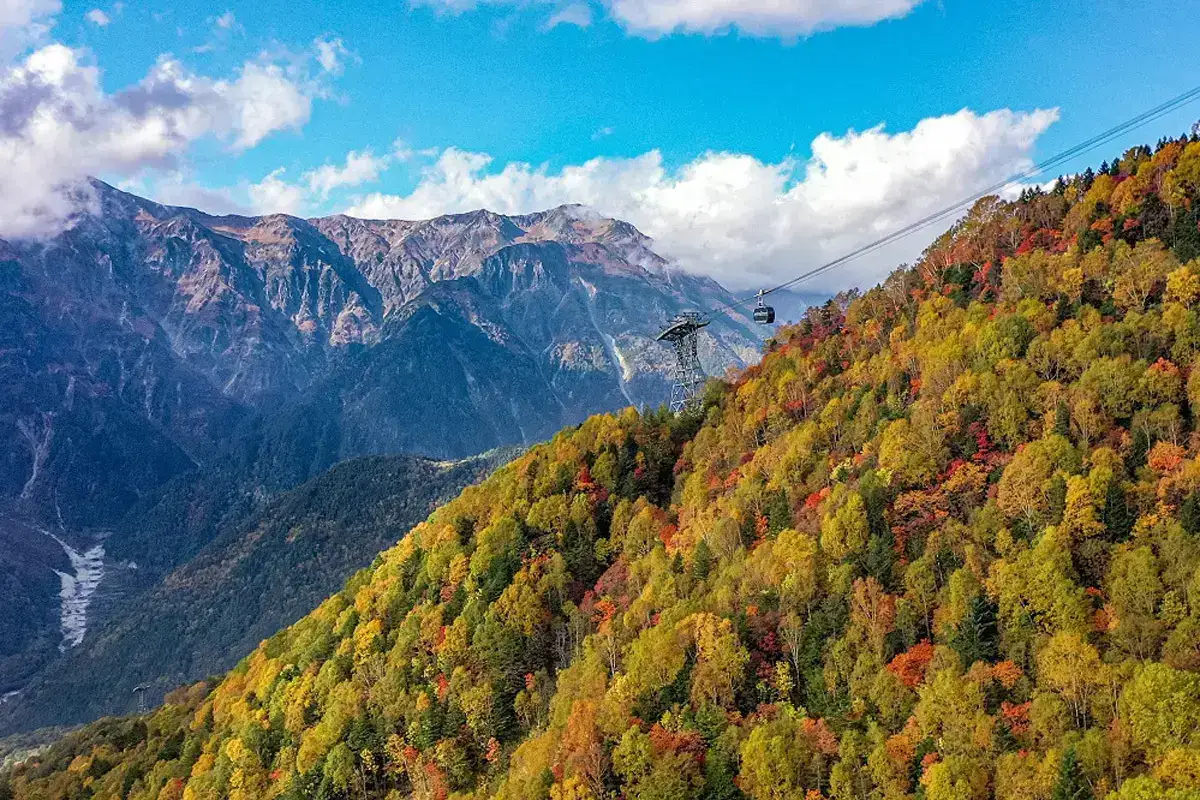
Shinhotaka Ropeway in autumn forest colour, used with permission. Service and views vary by season. · Editorial permission · Used with permission · Editorial permission · Resized and converted to WebP
Some booking links may earn us a commission at no extra cost to you. How we fund this guide.
When should you visit Okuhida for autumn leaves?
Use the usual autumn window as a starting point, then follow current local reports for the places you plan to visit. Colour varies with elevation, weather and the particular viewpoint, so there is no single guaranteed peak date for all of Okuhida.
Gifu’s official tourism information gives October as the customary broad period for autumn colour in Okuhida. Treat that as seasonal context rather than a promise that every village, ropeway viewpoint and nearby valley will look the same on your chosen day. Check current local information close to travel and keep the itinerary useful even if the timing is earlier or later than expected.
Our planning recommendation is to book an accommodation experience you want independently of the foliage. A suitable room, bathing arrangement and meal plan remain valuable when cloud obscures a view or leaves have already fallen. The mountain outing can then be chosen from current conditions rather than used to justify the entire stay.
Use the Okuhida village comparison to choose a base and decide whether autumn is primarily a ryokan break, a photography trip or a walking holiday. Those purposes can overlap, but each creates a different balance of early starts, luggage and time at the inn.
Why should you compare individual places rather than one regional forecast?
Compare the exact viewpoints and elevations on your itinerary because a regional colour label is too broad to make the daily decision. A report for one location should not be copied onto another simply because both sit in the Japan Alps.
Separate your potential outings into village surroundings, a ropeway visit and Kamikochi. Each requires a different journey and has its own conditions. The useful question is not simply whether “Okuhida is at peak,” but which place is worth visiting today and whether you can reach it without turning the whole day into transport.
Look for reports that identify the location and observation date. A scenic photograph can be inspiring while still being old, taken from a different elevation or showing a viewpoint you cannot access on this trip. Use such images as ideas, then obtain current practical information for the actual visit.
Avoid chasing a forecast so aggressively that it undermines the stay. Changing the base repeatedly can add hotel moves, extra luggage handling and arrival pressure. A well-chosen accommodation with one flexible day often gives a more pleasant autumn trip than a long circuit designed around an uncertain colour prediction.
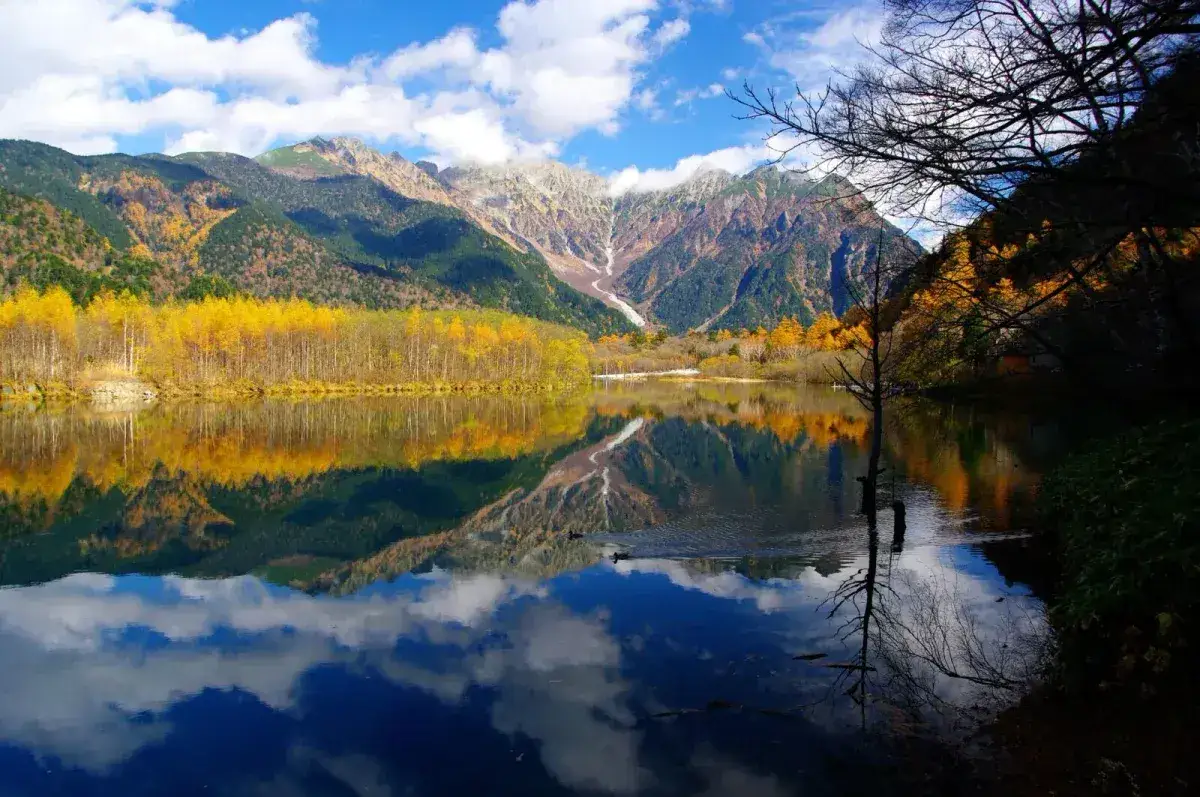
If photography is the main purpose, clarify which scenes you want. A valley panorama, trees beside water and foliage seen from a gondola are different subjects. Choosing one or two priorities makes it easier to evaluate weather and light without treating every possible viewpoint as essential.
Which autumn outing best suits your trip?
Choose a village-focused day for a slower ryokan break, the ropeway for a conditional mountain-view visit, or Kamikochi for a seasonal valley walk. Keep the decision tied to transport and conditions rather than the number of attractions in a guide.
| Outing | Main appeal | Decision before setting off |
|---|---|---|
| Village surroundings | Time near the inn and less transport | Which local paths and facilities are available |
| Shinhotaka Ropeway | Mountain setting and a lift-based visit | Service information, visibility and return bus |
| Kamikochi | Valley scenery and walking | Visitor season, route conditions and shuttle arrangements |
| Takayama town time | A different pace before or after Okuhida | Luggage, opening information and onward connection |
The Shinhotaka Ropeway guide explains the visit as an attraction rather than a hiking shortcut. A lift ride can suit travellers who do not want a long walk, but it still involves the day’s weather and a journey to the station. Service status and a clear view are separate questions.
For a Kamikochi day, use the Kamikochi visitor guide to choose a route suited to your group and the available time. Plan the return to Hirayu before adding a longer walk. A shorter route with time to pause can be more rewarding than hurrying toward a landmark simply to add it to the list.
For a ryokan-focused day, ask the accommodation which nearby places are appropriate to visit and which facilities are operating. Do not assume that every outdoor bath, footbath or local path is available because it appears in a general autumn photograph.
How should you arrange the bus and ryokan arrival?
Choose the arrival deadline first, then fit the outing between buses that leave you a comfortable margin. Autumn sightseeing should not depend on reaching the inn on the last possible connection before dinner.
The Takayama to Okuhida transport guide introduces the relevant corridor. Check the current dated timetable, the exact stop for the property and any service notices before setting off. If a pickup is required, arrange it directly and keep the meeting point clear.
A two-night mountain stay can let you keep the better-looking day for an outing. It also removes the need to carry all your bags while deciding between views. This is a practical reason to stay longer, rather than a promise that the extra day guarantees better colour or weather.
On a one-night trip, favour an earlier arrival and a manageable plan. If you are travelling from another city that morning, be honest about how much time remains after connections and luggage. Takayama, a mountain attraction and a full ryokan afternoon can be too much to expect from the same travel day.
Agree in advance which optional stop will be dropped if the journey takes longer than expected. This turns a delay into a simple decision instead of a debate while the dinner deadline approaches. Inform the property promptly if your arrival plan changes.
What should you know about Kamikochi late in autumn?
Check the current visitor season and the closing arrangements of individual facilities before making it the central outing. Autumn colour and ordinary visitor access do not necessarily end on the same day.
The official Kamikochi information describes an ordinary season broadly from mid-April to mid-November, while noting that some facilities close earlier. Use that information to ask precise questions about your travel date, not to assume that every hotel, shop, route and bus remains available until a single regional closing time.
Our Kamikochi season guide distinguishes the broad visitor window from the checks needed for a specific day. Confirm transport from Hirayu and the return journey, then assess how much walking fits. A late-season visit should not be improvised from a summer timetable.
Do not let a hoped-for photograph pressure you into a route beyond your preparation. The valley sightseeing area and mountain routes toward Hotaka-dake or Mt Yari are different undertakings. A foliage trip does not provide the equipment, skill or conditions assessment for a mountain climb.
If Kamikochi is not a suitable option, keep the trip coherent by returning to the original purpose: a mountain inn, bathing and an outing that fits the day. You do not need to replace it with an equally distant attraction simply to preserve the number of stops.
When should you book a ryokan for autumn?
Reserve as soon as your dates are firm, but choose a plan whose cancellation terms you understand. Autumn is a popular time for mountain travel in Japan, so rooms and bus seats in a small area such as Okuhida may be harder to secure than in a quiet month. That is a reasonable planning assumption rather than a measured occupancy figure, and the safest response is to book accommodation early and keep the sightseeing plan flexible.
Because foliage timing changes from year to year, it is unwise to fix a non-refundable stay around a single predicted date. Compare flexible and restrictive plans for the exact room, and read what happens if you must change dates. Ask the property about meal arrangements, since a flexible room-only reservation may behave differently from a plan with dinner. If you are considering several inns, the Okuhida ryokan guide shows how to compare room, bath and meal details on equal terms.
Booking early matters even more for private-bath rooms, which may be limited in number. Remember that an en-suite bathroom is not necessarily a hot-spring bath, so check the wording before paying extra for a feature you may not receive. The private-onsen guide explains the vocabulary and the questions to send before reserving.
If your preferred property is full, widen the search to another Okuhida village rather than abandoning the trip. The area includes several onsen districts, such as Hirayu Onsen, Shin-Hotaka Onsen and Tochio Onsen, and each has a different relationship to buses and viewpoints. Choose by access and character first, then check whether the nearest foliage report matches your ambitions.
Which Okuhida base suits an autumn trip best?
Choose Hirayu Onsen if you want the easiest connection to the bus network, and Shin-Hotaka Onsen if the ropeway is the focus. Other villages suit travellers who prefer a quieter setting and are prepared to confirm access and transfers in detail. No base guarantees the best colour, so decide on convenience and the kind of evening you want.
Hirayu works well for travellers combining Kamikochi with a ryokan night, because the village sits in the regional transport pattern. It is not automatically the best place for every visitor, and its inns differ widely in scale and bathing arrangements. Use the Hirayu village guide to understand the setting, then confirm the exact stop for your property.
Shin-Hotaka Onsen is closer in character to a mountain-viewing stay with the ropeway nearby. If you are planning a lift-based outing, the Shin-Hotaka Onsen guide and the Shinhotaka Ropeway guide help you judge how much of the day the visit will take. Keep the return transport in mind, and avoid scheduling an outing that leaves no margin before dinner.
For a slower trip, consider whether you would prefer a smaller village base and a short outing instead of a long circuit. A ryokan-led autumn can be rewarding when the weather is poor, because the room, bath and meal still carry the day. Whichever base you choose, save the property’s contact details offline and tell staff if your plans change.
What should you pack for an autumn stay?
Pack layers and weather protection for the actual places you intend to visit, and keep them accessible during transport. A sunny town departure does not tell you how comfortable you will be while waiting at a mountain stop.
Think about both movement and waiting. A traveller who is comfortable while walking may want another layer when stationary, and a group with children or seniors may pause more often than the itinerary suggests. Carry the items that let you shorten or extend a visit comfortably, rather than planning from an ideal uninterrupted walk.
Choose luggage that you can manage on the final approach to the accommodation. If storage or forwarding is part of the route, confirm the actual arrangement before relying on it. Keep essential medication, documents and an overnight set of necessities with you if your main bag is travelling separately.
For photography, bring only what you can carry while using transport and respecting other visitors’ space. Do not set up equipment in a way that blocks paths, entrances or bathing areas. A beautiful location remains a shared place, and private property does not become a public viewpoint because a room faces the trees.
Ask the inn about anything you expect it to provide. Clothing, bathing items and outdoor equipment should not be assumed from the style of accommodation. A short pre-arrival question is easier than finding that the item you left behind is needed for the outing you planned.
How can you make the trip worthwhile if the leaves disappoint?
Build the schedule around several reasons to enjoy the region, with colour as one element. A good autumn stay remains recognisable when a viewpoint is cloudy or the foliage differs from the forecast.
The Takayama and Okuhida itinerary combines town time with a ryokan night and one mountain outing. That structure is useful because it does not rely on a single scene. Keep meals, the room and enough time at the property in the plan instead of treating them as gaps between photographs.
Be selective about last-minute changes. A nearby alternative that fits the transport can be useful; crossing the region to chase an unconfirmed report may consume the whole day. Check the observation date and actual access before changing course, and keep the ryokan’s arrival requirements in view.
After the trip, describe the places and conditions you actually experienced rather than generalising one day’s colour into a permanent recommendation. Seasonal advice is most useful when it preserves uncertainty. For your own planning, that means choosing dates with realistic expectations and leaving space to enjoy the version of autumn that is there.
Your questions, answered
Is October the best month for Okuhida autumn leaves?
Official Gifu tourism information uses October as a broad customary window, but the actual timing differs between places and years. Check current local reports for your chosen viewpoints rather than expecting a region-wide peak. Book accommodation you want to enjoy regardless of whether the colour is early, late or partly obscured by weather.
Will the ropeway and Hirayu peak at the same time?
Do not assume the same timing. A village setting and a mountain viewpoint can show different conditions, so look for reports that name the exact place and observation date. Choose the day’s outing from those reports together with visibility, service status and transport. One regional colour label cannot answer all those questions.
Can I still visit Kamikochi in November?
Check the current official visitor season, the particular facilities you need and the dated transport arrangements. The usual broad season is not a promise that everything operates on every late-autumn date. Plan a suitable return journey and be prepared to choose another outing when the available services or conditions do not fit.
Should I stay one or two nights for autumn?
One night can work when you arrive early and choose one manageable outing. Two nights reduce packing and let you compare conditions across two possible sightseeing days. They do not guarantee better leaves or weather. Choose the length according to how much you want to enjoy the inn and how flexible your wider journey is.
Can I visit without driving during foliage season?
Investigate the current bus corridor and choose a property with a practical arrival stop or a confirmed transfer. Check both the outward and return timetable before fixing an outing, and protect the dinner arrival. A car is not automatically necessary, but the precise accommodation location and your luggage arrangements matter to a comfortable bus-based stay.
How early should I book an Okuhida ryokan for autumn?
Book once your dates are firm, because autumn is a popular season for mountain travel and a small area may have limited rooms. Prefer a plan with cancellation terms you understand, since foliage timing varies each year. Check the exact room, meals and bath arrangement, particularly if you want a private-bath category.
Which Okuhida village is best for autumn leaves?
No village guarantees the best colour, so choose by access and the stay you want. Hirayu Onsen suits travellers using the regional bus network, while Shin-Hotaka Onsen is closer to the ropeway. Check current local reports for each viewpoint and confirm the nearest stop and any transfer with your property.