Gifu, Japan · The Northern Alps
Takayama to Okuhida: Nohi Bus Planning 2026
Use Nohi Bus from Takayama Nohi Bus Center to reach Okuhida, then get off at the stop confirmed by your accommodation. Hirayu, Fukuchi, Shin-Hirayu, Tochio and Shin-Hotaka are different destinations. Choose the village before choosing a departure, and check the final arrival arrangements with your ryokan before setting out.
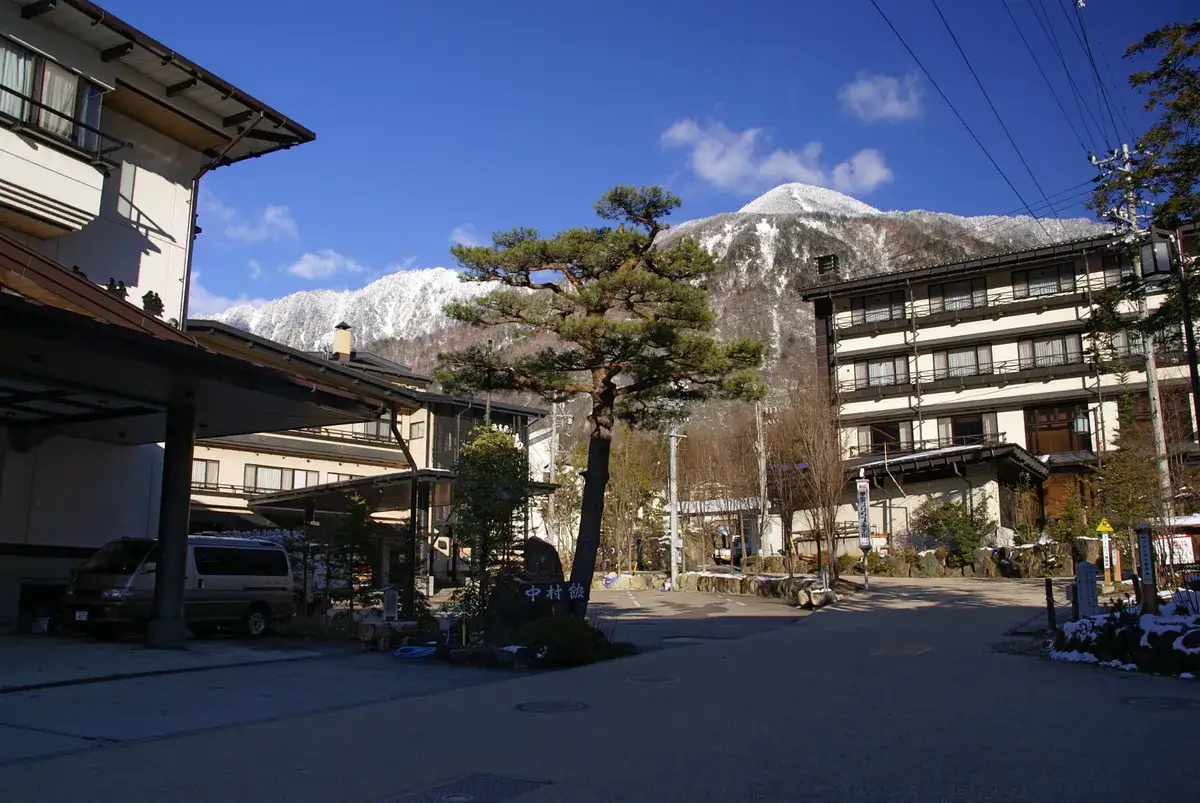
Archive view of Hirayu Onsen beneath snow-covered mountains; buildings and streets may have changed. · 663highland · CC BY 2.5 · Wikimedia Commons · Resized and converted to WebP
Some booking links may earn us a commission at no extra cost to you. How we fund this guide.
How do you travel from Takayama to Okuhida?
Travel by Nohi Bus on the Hirayu–Shinhotaka route, using the stop that matches your village and accommodation. Okuhida names a wider hot-spring area rather than a single terminal, so a successful route search still needs a precise final destination.
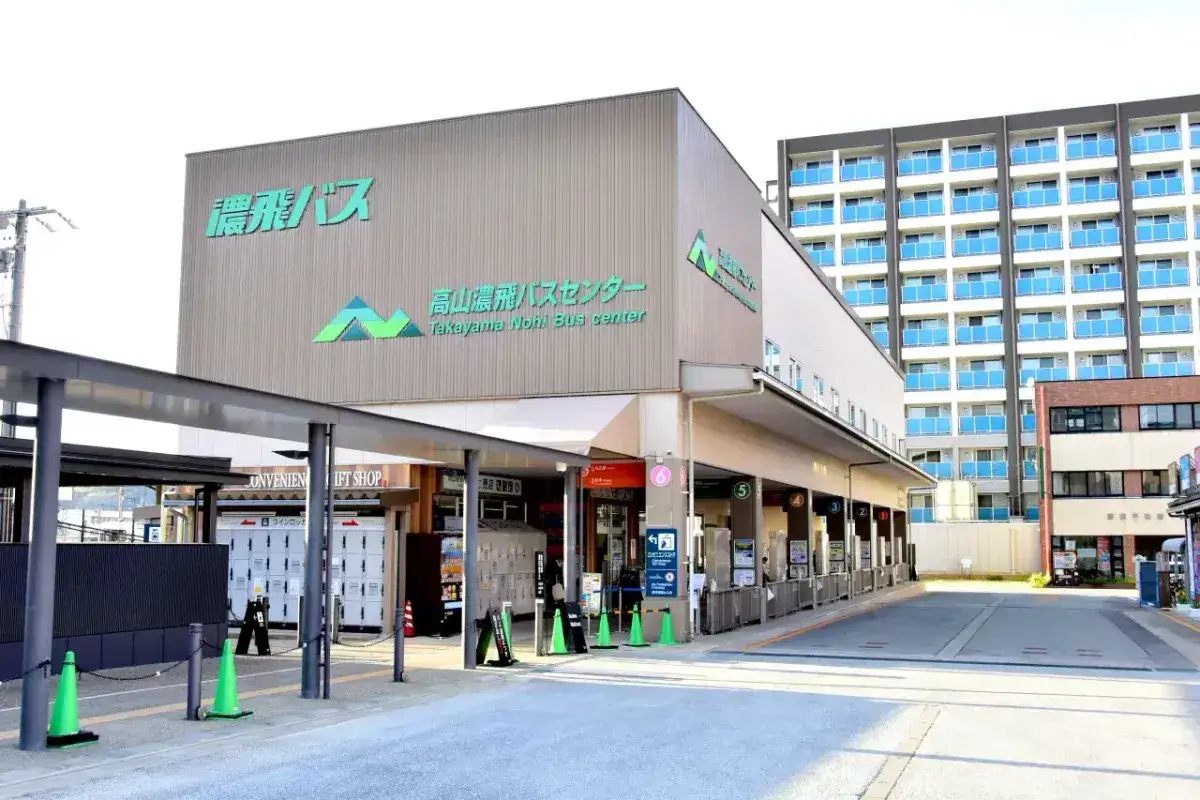
Takayama is the organising point for travellers arriving by railway or staying in the city first. Begin at the bus center beside JR Takayama Station and compare the official timetable with the arrival instructions from your accommodation. That combination is more reliable than choosing whichever bus appears next in a general map application.
If your trip begins elsewhere, separate the long-distance arrival from this local leg. A train to Takayama does not take you directly to the hot-spring villages. You need time to leave the station, find the departure and reach the ryokan before its relevant arrival or dinner deadline.
The Okuhida overview compares the five villages before you choose a stay. Deciding where to sleep first makes the transport question clearer: the best departure serves your exact stop at a comfortable arrival time.
Which village should you put in the route search?
Use the specific village or stop supplied by the property, not only the regional name. Hirayu is a transport interchange; the other villages continue farther into the area, and some properties use a stop whose name does not exactly match the accommodation address.
| Destination | Reason to consider it | Detail to confirm |
|---|---|---|
| Hirayu Onsen | Interchange-based stay | Property approach from the terminal |
| Fukuchi Onsen | Village and ryokan stay | Village stop and service pattern |
| Shin-Hirayu Onsen | Accommodation-focused base | Exact stop rather than broad village name |
| Tochio Onsen | Another base on the regional route | Final walk and onward departures |
| Shin-Hotaka Onsen | Northern Okuhida excursions | Hotel stop versus ropeway terminus |
These are planning distinctions, not claims that every traveller must prefer one village. A room, meal arrangement or bath may be the reason you choose a property. Transport then needs to support that choice rather than dictate it after booking.
Be careful with similar spellings. Hirayu and Shin-Hirayu are different locations. Shinhotaka Onsen and Shinhotaka Ropeway also appear as separate stops. Save the Japanese name from the ryokan’s arrival page so you can show it at the terminal.
How do you read the timetable correctly?
Start with your travel date, select one outgoing service column, and follow it from Takayama to the destination row. Check symbols, blank cells and operating-period notes before treating that column as a workable departure.
A bus timetable is a collection of individual services, not a menu of interchangeable times. If an appealing arrival appears in a neighbouring column, trace it back to its departure and confirm that it operates on your date. Do not attach it to the departure you first selected.
The Nohi page includes outgoing and return tables. Save both, even if staying overnight. You may need an alternative arrival if the railway is delayed, or want to know what happens if you leave earlier the next morning.
Check notices as well as the main timetable. A diversion or road problem can alter boarding arrangements even when the route name remains unchanged. Treat staff confirmation and the operator’s current information as the final check, particularly after heavy weather.
Where do you buy a ticket and board?
Follow Nohi’s purchase instructions for your boarding point, and confirm the current departure bay at the terminal. Do not rely on a platform number copied from a photograph or assume a similarly named highway-coach ticket covers the local bus.
The operator gives purchase guidance for major locations including Takayama Nohi Bus Center and Hirayu. Read it before joining the queue, and ask if your journey includes a break or a combined product. The appropriate purchase depends on the journeys you intend to make.
Prepare a concise counter question: village, stop, date and whether the trip is one-way or part of a return plan. That is easier to resolve than showing a lengthy hotel confirmation with several addresses or asking only for the onsen bus.
Keep tickets ready while keeping passports secure. When travelling as a family, agree who holds the tickets and who checks the bags. Boarding is calmer when one person confirms the destination and another ensures nothing remains at the stop.
How should you connect from a train?
Allow time between the train arrival and bus departure for leaving the station, finding the terminal and confirming the service. The railway arrival is only part of the connection, and the next bus may create an unnecessarily rushed journey.
Before choosing a train, identify two possible buses. If the first becomes impractical, you already know the effect of taking the second. This matters on arrival days involving luggage, children, older relatives or several separate reservations.
Do not assume a missed connection will be handled automatically across operators. If the incoming train is delayed, contact the ryokan with a revised plan. A meal-inclusive booking may have an earlier practical deadline than a room-only city hotel, and that should influence the route you book.
For a trip from central Japan, compare the Nagoya arrival route before buying separate tickets. Travellers from Tokyo should compare the through highway-coach option with the Tokyo arrival guide, because travelling through Takayama is not the only approach worth investigating.
How do you get from the stop to the ryokan?
The last approach is property-specific, so ask the ryokan for its correct stop and directions. A nearby map pin does not establish a level walk, a convenient approach with suitcases or a hotel collection service.
Send the property the bus you are considering and ask whether it fits the arrival arrangements. If collection is offered, confirm where to wait, how to contact staff and what happens after a delay. Do not infer a shuttle from another traveller’s account or a different property’s service.
Consider the approach with luggage in mind. A small distance can be awkward in rain or snow, and a path shown in summer photographs may not describe the winter route. Ask directly if anyone in your group has a mobility limitation.
The Hirayu village guide and Shin-Hotaka guide explain how those bases fit the wider trip. Use the village guide to choose a base, then use the property’s instructions for the final approach.
How much luggage can you take?
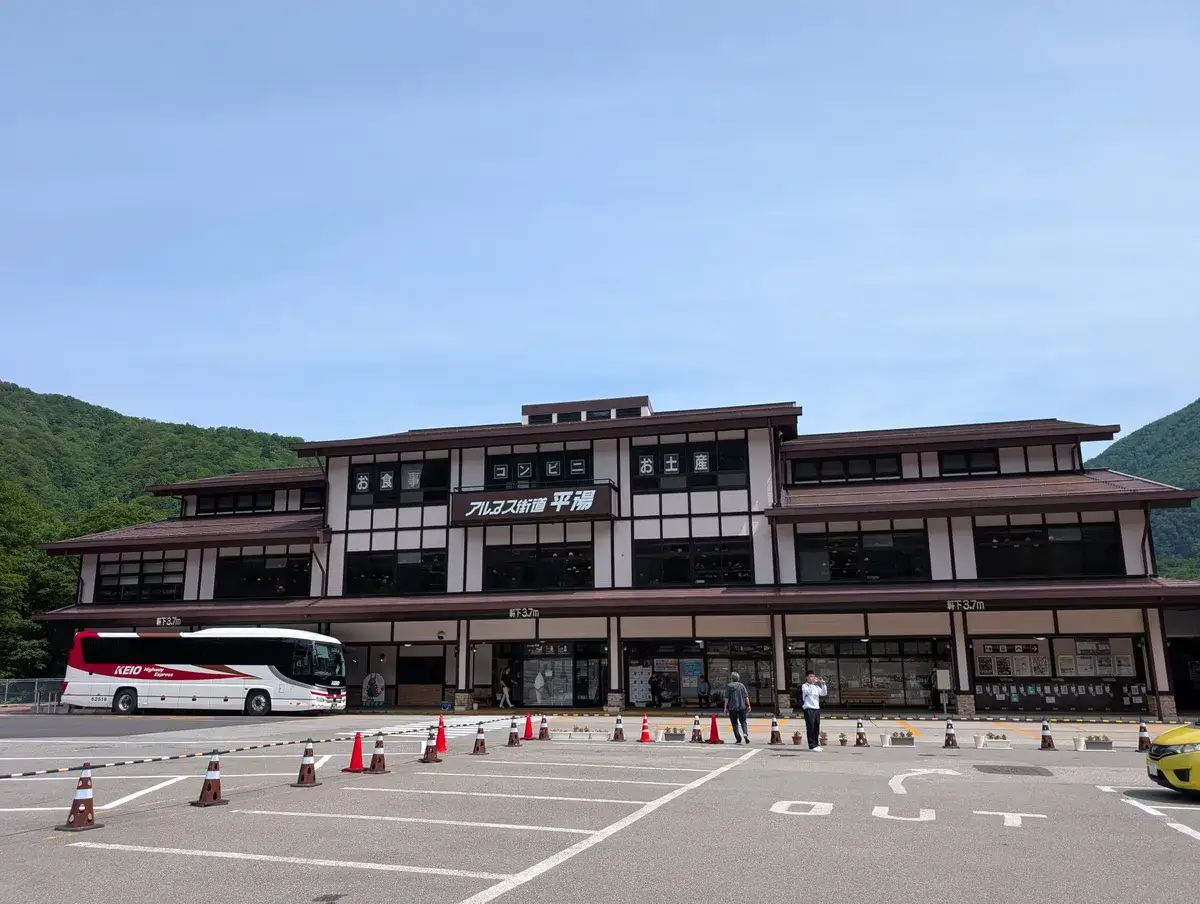
Take what you can manage through the complete trip, including station exits, ticketing and arrival at the accommodation. Nohi publishes baggage guidance, but storage and unusual items should be checked directly rather than assumed from a coach photograph.
If Okuhida is a short part of a longer holiday, ask whether your city accommodation can hold the main bag or whether luggage forwarding suits the route. Confirm the provider and delivery timing before relying on it; essential items should stay with you rather than depend on an assumed delivery date.
Keep a smaller arrival bag with medicines, warm layers, documents, chargers and anything needed before opening the suitcase. If the bus uses a luggage compartment, this avoids searching for an important item at an intermediate stop.
For strollers, wheelchairs and sports equipment, ask about dimensions and handling on the intended service. The accommodation’s ability to store an item and the bus’s ability to carry it are separate questions. Resolve both before committing to a route that depends on them.
What changes in winter or disruption?
Winter arrivals deserve flexibility and early communication with the property because the route uses mountain roads. Nohi warns of substantial delays from snow and congestion; a printed arrival should not be treated as a guarantee.
Carry clothing suitable for waiting outside as well as sitting in a heated vehicle. Keep a charged phone and offline copies of the address and timetable. If conditions deteriorate, those preparations matter more than adding attractions between connections.
Choose an arrival with room before dinner rather than the latest theoretically workable bus. If delayed, tell the property what happened and ask for instructions. Avoid promising an exact revised arrival until you have a confirmed onward service.
A rental car is a separate decision involving equipment, licence eligibility and parking. It should not become a last-minute substitute simply because the timetable feels restrictive. If uncertain about winter driving, plan around public transport and a realistic margin instead.
How can you add sightseeing without complicating arrival?
Prioritise the ryokan arrival, then choose sightseeing on a flexible day. The regional route connects village stops with the ropeway, while Kamikochi requires its own seasonal access plan through Hirayu. Sharing an interchange does not make every combination comfortable in one day.
A first-night plan can simply be to arrive, settle in and use the accommodation you chose. If sightseeing before check-in matters, confirm luggage and meals rather than treating the property as a bag drop with unrestricted arrival time.
For the next day, check attraction status before leaving. A bus can operate when a ropeway is suspended, and an onsen village can remain open when a separate seasonal destination does not accept ordinary visitors. Check each element independently.
Write down four things: departure from Takayama, correct village stop, property approach and the next morning’s direction. Once those pieces fit, optional activities become easier to compare without putting the reserved stay at risk.
Should you stay a night in Takayama before or after Okuhida?
Stay in Takayama first if you arrive late, want to see the town properly or need a calmer start; stay afterwards if your onward train or coach leaves early from the city. Okuhida rewards an unhurried arrival, so a Takayama night often protects the ryokan evening rather than competing with it.
Splitting the trip also reduces the number of fixed deadlines in a single day. Before the stay, you can leave Takayama after a relaxed breakfast and reach the village with daylight to spare. After it, a Takayama night lets you collect larger luggage and finish the journey on a separate morning. The cost is an extra check-in and a second round of packing, so weigh it against the length of your holiday. See the Takayama ryokan guide for a traditional stay in town and the Takayama and Okuhida itinerary for a combined plan.
What should you do if you miss the bus or arrive late?
Contact your ryokan first, then check the next departure that serves your exact stop and decide whether to continue or return to a Takayama bed. Do not board a different service only because it is leaving; confirm that it reaches your stop on your date.
Ask staff at the bus center to read the timetable for your destination, and show the stop name written in Japanese from the ryokan’s arrival page. Find out whether a later departure exists today before you leave the terminal, since last services on mountain routes can be earlier than visitors expect.
If no workable bus remains, a Takayama overnight is usually easier to manage than an unplanned taxi or drive. Tell the property promptly so it can adjust dinner and your room. Ask about its late-arrival and cancellation conditions at that point rather than guessing, and keep any messages as a record. Check the 2026 operating notes again the next morning before trying a second attempt.
What should you confirm before the travel day?
Confirm the property name, date, party size and meal plan against the transport you selected. A small booking error becomes harder to resolve after leaving the city, particularly when a group splits its paperwork between several phones.
Send one clear arrival message containing the departure and stop, then retain the reply offline. Ask only the unresolved practical questions rather than requesting a complete new itinerary. This makes it easier for the accommodation to identify a wrong stop or explain an unusual entrance.
Finally, review the next day before closing your planning notes. An arrival bus that works well does not prove your onward departure will fit breakfast, checkout and a later reservation. Booking a comfortable two-way plan protects the time you wanted to spend in Okuhida in the first place.
What should a group decide before boarding?
Agree on the exact village stop, who holds the accommodation details and what to do if the party becomes separated. A shared regional destination is too vague when several similar stop names appear along the same bus route.
Send the concise arrival summary to every adult before departure. Include the Japanese property name, the stop confirmed by the ryokan and any meeting instructions, while keeping booking references private. Each person should be able to explain where the group is going without relying on one phone remaining charged.
When the bus approaches the arrival area, gather small belongings early without standing while the vehicle is moving. Count bags and make sure the person managing a child or mobility aid has help with other items. If uncertain about a stop, ask the driver using the specific destination rather than making a rushed guess based on a passing sign. These decisions take little time at the terminal and reduce confusion when the journey is ending.
Your questions, answered
Does Okuhida have a railway station?
Plan the Okuhida leg as a road journey rather than searching for a single regional train station. Takayama is a useful railway arrival point, followed by Nohi Bus to the appropriate village. The exact stop comes from your accommodation’s arrival instructions, particularly when similar village names appear in searches.
Which stop should I use for my ryokan?
Ask the property for its preferred bus stop and final approach. A village name covers several accommodation locations, and the nearest-looking map pin may not describe the best entrance. If collection is offered, confirm it directly with your expected bus and the instructions to follow after a delay.
Can I reach all five villages on the same route?
Use Nohi’s Hirayu–Shinhotaka timetable to compare village stops, then examine each service column. Stops and operating notes matter, so the route name alone is not enough. Check the precise village and departure rather than assuming every bus serves every accommodation area in the same way.
Is a late arrival suitable for a ryokan stay?
Ask the property before booking transport. A stay with dinner can have different arrival expectations from a room-only hotel, and road delays may affect the last part of the day. Choose an earlier connection where possible and communicate promptly if the incoming journey becomes disrupted.
Should I stay in Takayama or Okuhida?
Choose Takayama for a city base and Okuhida when the ryokan experience is central to the trip. Compare the complete route, meals and next destination rather than only distance. An overnight in Okuhida works best when you leave enough time to enjoy the property after arriving.
What should I do if I miss the last bus to Okuhida?
Contact the ryokan straight away, then ask the bus center whether any later service reaches your stop that day. If none does, consider a Takayama overnight and explain the change to the property. Avoid improvised taxi or driving plans until you understand the road conditions and whether the accommodation can still receive you.
Can I use a rail pass on the Okuhida bus?
Do not assume a rail pass covers Nohi Bus. Coverage depends on the specific pass and route, and a pass valid for the train to Takayama may not include the local Okuhida service. Read the pass conditions, then compare the Hirayu–Shinhotaka route you plan to use before buying anything extra.