Gifu, Japan · The Northern Alps
Hirayu Bus Terminal: Transfers and Arrival Guide
Hirayu Bus Terminal is the main interchange for travellers moving between Takayama, Okuhida and seasonal Kamikochi services. Arrive with the exact route, destination and booking details ready. A ticket or pass does not always reserve a seat, and your ryokan may be in a different village from Hirayu.
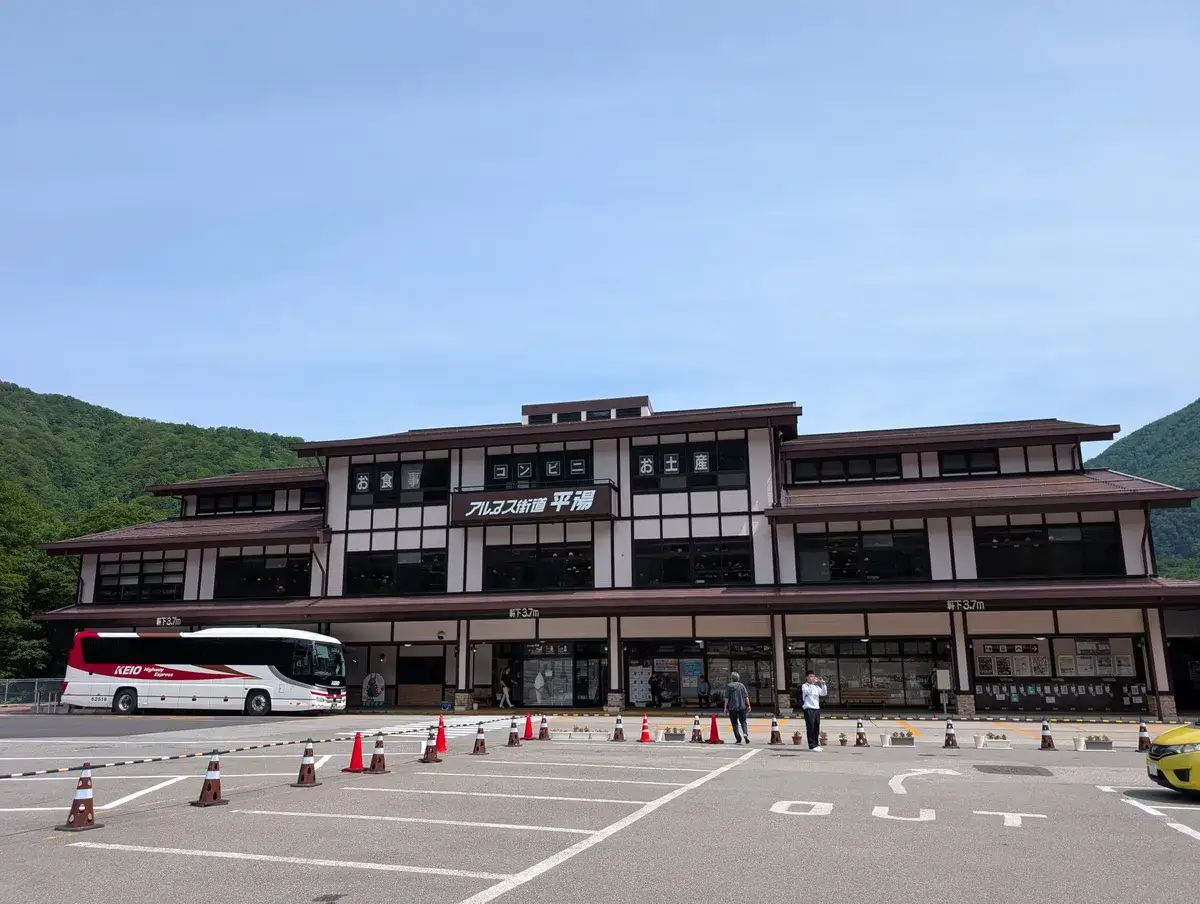
Hirayu Bus Terminal exterior. Check current boarding points and services with the operator. · Takipoint123 · CC BY-SA 4.0 · Wikimedia Commons · Resized and converted to WebP
Some booking links may earn us a commission at no extra cost to you. How we fund this guide.
What should you do when you arrive?
Start with your next departure, not the nearest queue. Check the destination display and ask staff to confirm the boarding point for the service on your ticket. Similar-looking buses can serve different corridors, and the place where you got off is not automatically where you board again.
Keep your booking confirmation accessible offline. If your hotel is beyond Hirayu, show its Japanese name and requested stop rather than saying only “Okuhida”. The five villages share a destination label but do not share one hotel drop-off point.
Which journeys connect here?
Use Hirayu as an interchange, while checking each route independently. Takayama and the Shin-Hotaka corridor are part of the local transport network; Kamikochi and Norikura require attention to their seasonal operating arrangements. Matsumoto journeys have their own booking conditions.
Never interpret a line on a map as a guaranteed connection. Read the timetable for the direction you need and the calendar applying to your travel day. Allow time to find the next boarding point, handle luggage and resolve any ticket questions.
Can you leave luggage during a side trip?
Confirm storage availability and collection arrangements before depending on it. Locker space, staffed storage and baggage acceptance are separate questions. A large family suitcase may not fit the first available locker, and collection must work with the return departure you intend to catch.
Carry the things you will need if the excursion runs late: accommodation contact details, essential medication, a charged phone and weather layers. If you have a hotel booking nearby, ask the property directly whether it can hold bags before check-in rather than assuming the terminal will solve everything.
How much transfer time should you allow?
Leave a practical buffer rather than booking the tightest connection displayed by a journey planner. Road delays, boarding queues and unfamiliar signs can turn a technically possible transfer into a stressful one. The cost of a missed final bus is much greater than a short wait indoors.
If you plan a bath or lunch during the stop, check the return departure before leaving the terminal. A “quick soak” involves changing, washing and getting dressed again. Tell your ryokan if a delayed connection threatens the agreed arrival time or dinner arrangement.
Which option fits your trip?
| Destination | What to check | Avoid assuming |
|---|---|---|
| Takayama | Departure, ticket and onward train buffer | Arrival on a timetable guarantees a tight connection |
| Shin-Hotaka corridor | Exact village and hotel stop | Every Okuhida hotel is in Hirayu |
| Kamikochi | Seasonal service and return | Summer arrangements apply in winter |
| Norikura | Operating day and required transfer | The mountain bus serves Norikura Kogen |
Where does Hirayu fit in the Okuhida transport network?
Hirayu is the interchange to understand before planning a bus-based Okuhida holiday. It connects the Takayama approach with journeys toward other onsen villages and seasonal mountain outings. It is not a railway station, and it is not the final stop for every property sold under the Okuhida name. Use the Nohi Bus route directory to identify your exact corridor. Write your accommodation’s Japanese name and requested stop beside the route. Hirayu Onsen and Shin-Hirayu Onsen are distinct places; confusing them can leave you at the wrong village. A reservation address containing Takayama also does not mean the property is near Takayama railway station. The municipal name covers a much wider area than the walkable city centre.
Think of the terminal as a decision point. On arrival, establish whether you are staying in Hirayu, continuing along the Shin-Hotaka corridor, changing toward another gateway, or starting a day excursion. That single distinction makes the departure board easier to interpret and avoids following other passengers onto a bus serving a different purpose.
How do you read a timetable without choosing the wrong service?
Match the direction, operating dates and stop sequence before looking at the departure time. A screenshot of one timetable column can omit the footnote that determines whether the service runs. Use the operator’s current route page and keep the explanatory notes with your saved copy.
Identify your boarding stop and arrival stop in the same column. Then check whether the service requires a reservation, a particular ticket or a transfer. A pass being accepted on part of a route does not establish a reservation entitlement. If travelling with a child, check the relevant ticket category rather than assuming the booking system applies the same age rules as a ryokan.
For an onward connection, read the second timetable independently. Do not assume two routes coordinate simply because they share Hirayu as an interchange. A journey-planning app can help find possibilities, but the operator’s calendar and notices settle the details. If you are unsure, show staff both journey legs and the date, rather than asking only which bus goes to the general region.
How should you transfer between buses with suitcases?
Keep the group together until you have confirmed the next departure and boarding point. Retrieve every bag from the arriving vehicle before moving away, then organise the tickets and luggage without blocking the boarding queue. Allocate one adult to the bags and another to children when possible.
Ask the operator about baggage handling for the service you will use. A large coach and a smaller local vehicle may offer different practical arrangements. Keep medication, valuables and the next ticket with you instead of in a suitcase that may be placed away from your seat. Label similar-looking bags so they are easier to identify at a busy interchange.
Avoid scheduling a sightseeing stop during a transfer merely because the timetable shows a gap. First settle whether luggage storage is available and when bags must be collected. Then decide whether there is enough time for the activity itself. A comfortable wait with food and a toilet break is often more useful than a rushed outing that puts the next bus at risk.
What should you know before changing for Kamikochi?
Treat Kamikochi as a separate seasonal excursion with its own return arrangements. Check the current access information before boarding, and establish whether you will alight at a walking-route stop or continue to the main terminal. The outbound choice affects how you organise the return. Decide your walk before leaving Hirayu. Starting near Taisho Pond can suit a one-way valley walk, while continuing to the main visitor area can suit a shorter outing. Read the Kamikochi hiking guide to compare those choices. Do not choose a stop simply because several other passengers get off there.
Before walking away from the Kamikochi arrival area, confirm the return process and leave a margin for queues. If your accommodation is beyond Hirayu, you still need that final connection after returning from the valley. Carry the property’s contact details and agreed arrival time. A day trip is easier to manage when the group knows which return is the preferred one and which is the final workable alternative.
How is the Norikura connection different?
Norikura requires destination-specific planning because Tatamidaira and Norikura Kogen are different places. The Gifu-side mountain service is a seasonal route, not a general shuttle between every place carrying the Norikura name. Check the current Nohi Bus notice for the Hirayu and Honokidaira arrangements. If your goal is Tatamidaira, verify that the mountain service runs on your date and whether your chosen departure involves a change. If your hotel is in Norikura Kogen, obtain the recommended Nagano-side arrival route from the property. Do not buy a ticket to a mountain sightseeing destination and expect it to deliver you to a plateau hotel.
Weather can affect the higher road while Hirayu itself appears comfortable. Keep a lower-level alternative and check the notice before committing to the approach journey. The Norikura guide explains the destination distinction in more detail. An operating bus toward part of the mountain corridor does not establish that all onward walks or cross-mountain connections are available.
Can you use a transfer gap for a bath or waterfall visit?
Only do so when the gap covers the complete outing and leaves a useful return buffer. A bath needs time for admission, changing, washing and dressing; a waterfall visit includes the approach and the walk back. Neither should be measured solely by the time spent at the main attraction.
For bathing, choose a facility whose current admission and luggage arrangements you have checked. Read the day-use onsen guide before deciding whether a transfer stop is long enough. Do not take a suitcase into changing areas without asking. If the facility cannot hold it, the bathing plan needs another storage solution.
For Hirayu Waterfall, ask locally about the current pedestrian approach and conditions. Snow or a changed access route can invalidate an old walking estimate. If you are waiting for the final bus of the day, keep the outing close and reversible. Missing that service can affect your entire hotel evening, while skipping a short walk rarely damages the wider holiday.
What happens if you miss a connection or arrive late?
Check the next legitimate departure with the operator, then contact your accommodation if arrival will change. Deal with the transport facts before improvising another sightseeing stop. The hotel needs to know about a delay especially when dinner is part of the reservation.
Do not assume a taxi will be waiting or that a property can collect you from anywhere in the valley. Ask about actual availability, the collection point and any conditions before relying on an alternative. If travelling toward Matsumoto or another gateway, check whether a later departure still connects with your next train rather than assuming the original itinerary can simply slide back.
Save contact information offline before travel. Include the hotel name in Japanese, reservation number, route page and an alternative overnight option if disruption makes the original journey impossible. When several people are travelling together, share those details. A calm response is easier when one person can contact the property while another checks the departure board and keeps the bags together.
Is Hirayu a sensible overnight base between journeys?
Hirayu is worth comparing when several planned outings use this interchange, particularly if you want to reduce repeated village transfers. Choose the actual hotel by its arrival route, room needs and meals, rather than assuming every Hirayu address is beside the terminal.
Before booking, ask how to reach the entrance with luggage and whether the route is comfortable after dark or in snow. If you plan an early departure, discuss breakfast and checkout arrangements. A ryokan plan built around a leisurely morning may not suit a very early mountain bus, while skipping an included meal changes the value of the stay.
Compare Hirayu ryokan with a Takayama night if your next journey begins in the city. The best base is the one that removes the awkward connection from the busiest day. You can still enjoy a hot-spring visit without using the same hotel for every outing. Plan the overnight sequence first, then use the terminal as the connection that supports it.
What information should you keep on one offline travel note?
Keep the accommodation’s Japanese name, exact stop, preferred onward service and contact details together. Add the route page and a saved timetable that includes its date notes. This is more useful at an interchange than several unrelated screenshots whose directions and validity are unclear.
For each bus leg, write the boarding place, destination and whether you need a reservation or another ticket. If the next journey starts at a different stop, include that location too. Keep any luggage-storage collection arrangement on the same note, so it is not forgotten when the group becomes focused on boarding.
Share the note with another traveller before departure. One phone may run out of power or be occupied with a ticket while someone else needs to find the hotel address. For a family, include who manages bags and who stays with the child during changes. These small decisions reduce the need to reorganise at the busiest moment, especially after a long journey when several buses are loading at once.
When is staying in Takayama simpler than transferring through Hirayu?
A Takayama night may be simpler when the next morning’s activity or train begins in the city. Compare the complete hotel sequence rather than assuming every night in a mountain region should be spent at an onsen. You can choose an Okuhida night for the bathing experience and a city night for an early departure.
For example, an evening return from Shirakawa-go followed by an early guided departure can be awkward if both are joined to a remote village hotel. A city base may remove two road journeys. On the other hand, several outings using Hirayu can make an appropriately located Hirayu property convenient. The useful choice depends on your actual departures, not a universal best base.
Before changing hotels, count the extra packing and luggage work too. A split stay helps when it removes a difficult connection; it adds little when it merely changes the scenery outside the room. Use Hirayu as a transport tool, and choose the nights around the experiences you most want to enjoy comfortably.
Where should you go next?
Continue planning with Takayama to Okuhida, Matsumoto to Okuhida, Hirayu Onsen guide, Kamikochi from Okuhida. Start with the Okuhida travel guide if you are still choosing a village base.
Your questions, answered
Is Hirayu Bus Terminal the same as Hirayu Onsen?
The terminal serves the Hirayu Onsen village area, but an accommodation address still matters. Some stays are convenient on foot, while other Okuhida villages require another journey. Use the hotel’s own access instructions and ask which stop to use instead of relying on the regional destination name.
Do I need to reserve every bus?
No single reservation rule applies to all departures. Check the operator’s current route page for the exact service, direction and date. A reserved highway service and a local route bus may have different arrangements. If your ticket is a pass, confirm whether seat reservation is a separate step.
Can I transfer to Kamikochi here?
Hirayu is an important western access point for Kamikochi during the visitor season. Check current service dates, departure arrangements and return options before making plans. Do not apply a summer timetable to a winter trip or assume a bus will run simply because a map shows the route.
Can I walk to a different Okuhida village?
Do not plan a village transfer as an ordinary urban walk. Mountain roads, distance, traffic and missing pedestrian space can make an apparently short map connection inappropriate. Use the route bus or a confirmed hotel transfer and reserve local walking for paths that are actually intended for pedestrians.
What should I check before leaving the terminal?
Confirm your next boarding point, departure, ticket conditions and hotel stop. If you are heading out for a side trip, check the return service as well. Save the timetable and accommodation contact offline so a weak mobile connection does not leave you without essential journey details.