Gifu, Japan · The Northern Alps
Tokyo to Okuhida: Train and Bus Routes 2026
Compare a reserved highway coach to Hirayu with rail journeys through Matsumoto or Nagoya and Takayama. The best Tokyo-to-Okuhida route depends on your village, starting station and next destination. Choose your ryokan arrival deadline first, then work backwards through the official train and bus schedules instead of selecting the fastest-looking first leg.
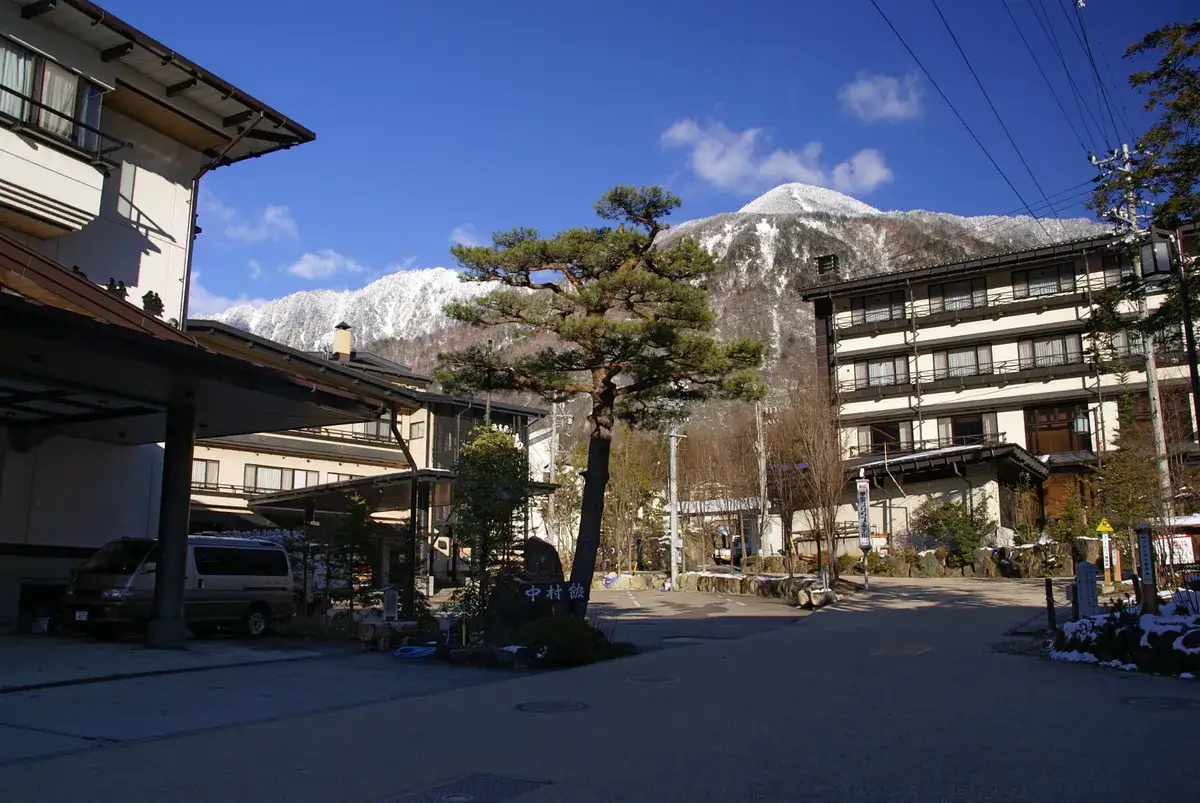
Archive view of Hirayu Onsen beneath snow-covered mountains; buildings and streets may have changed. · 663highland · CC BY 2.5 · Wikimedia Commons · Resized and converted to WebP
Some booking links may earn us a commission at no extra cost to you. How we fund this guide.
Which Tokyo-to-Okuhida route should you compare first?
Compare the Shinjuku–Hirayu highway coach first if a direct road journey suits you; compare rail through Matsumoto or Nagoya if you prefer a railway-led trip. There is no single best route for every village, and the final connection matters as much as leaving Tokyo.
A booking search for Takayama may miss an important option: Nohi’s Tokyo route serves Hirayu on its way between Shinjuku and Takayama. That can make Hirayu a more useful arrival point than continuing to Takayama and then returning into the mountains. Check the actual stop and service in the current route table.
Rail through Matsumoto is another route to investigate, especially for a trip that includes the eastern side of the Japan Alps. Rail through Nagoya and Takayama may fit a wider journey through central Japan. Compare the complete connection chain rather than assuming that a train journey must finish at the region’s best-known city.
Use the Okuhida overview to choose between the villages before reserving long-distance transport. A hotel location that looks close to a mountain landmark may still require a further bus after your main arrival.
How does the direct Shinjuku-to-Hirayu coach work?
Book a service that permits travel between your chosen Tokyo boarding point and Hirayu Onsen, then confirm the departure terminal and arrival instructions. The operator’s current page requires reservations for the express service; it should not be treated like an unreserved local bus.
Start by selecting the date and destination, not by choosing the most convenient time printed in a search result. The route table can contain operating-period notes and different Tokyo stops. A departure shown for one location does not establish that the same coach boards at another terminal.
Keep the reservation confirmation, boarding instructions and any payment deadline together. Check whether your booking is fully paid and what must be shown to board. If a confirmation requires an exchange or additional step, resolve it before arrival at the terminal rather than while the coach is loading.
For Hirayu accommodation, ask the property for directions from the arrival point. For Fukuchi, Shin-Hirayu, Tochio or Shin-Hotaka, check the local onward journey independently. A direct coach to Hirayu does not deliver you to every property in Okuhida.
How do you travel through Matsumoto by train and bus?
Use a suitable JR East service to Matsumoto, then connect with the reserved Matsumoto–Hirayu bus. JR East’s Azusa route information identifies the Shinjuku–Matsumoto connection; choose a specific train that fits the bus rather than relying on a general route description.
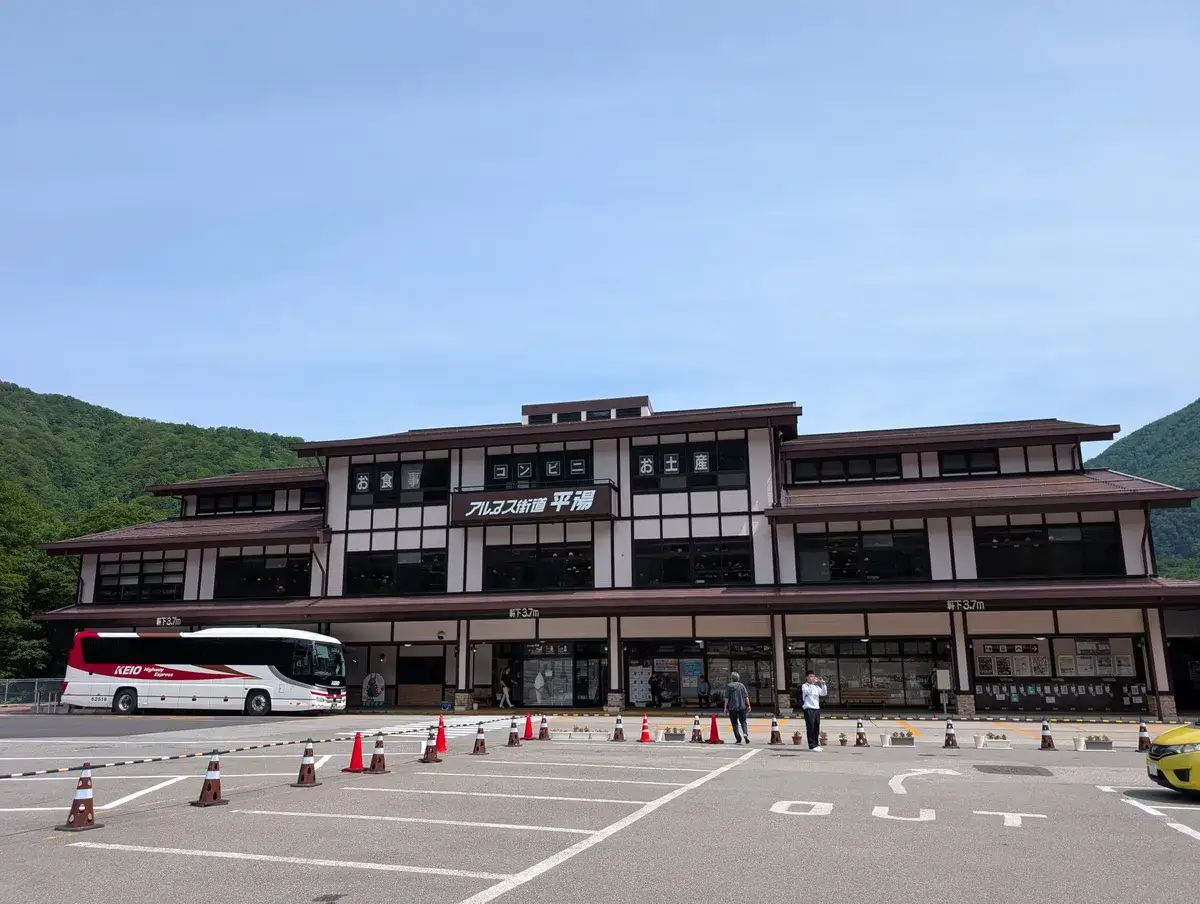
At Matsumoto, allow time to leave the railway station, find Matsumoto Bus Terminal and check the boarding point. The railway platform and coach bay are separate parts of the journey. With luggage, the useful transfer margin is more than the walking time drawn by a map application.
The current Nohi Matsumoto route requires a reservation. Check the operator page for the selected service and the date before making a train reservation that depends on it. Older trip reports describing a different booking arrangement should not override current instructions.
Read the Matsumoto-to-Okuhida guide if you intend to use this approach. It explains why Hirayu is the main planning point and why occasional through services should be checked separately instead of assumed.
When does travelling through Nagoya and Takayama make sense?
Use the Nagoya approach when it fits your wider railway itinerary or when you want a Takayama stop before Okuhida. Compare a Tokyo–Nagoya Shinkansen, a suitable Hida limited express toward Takayama and the final Nohi Bus journey to your village.
JR Central publishes railway booking and timetable information, while the Hida route is identified by JR operators as linking Nagoya with Takayama. Check the specific services and seating arrangements rather than substituting a generic total journey estimate.
This approach has more separate stages than a direct coach to Hirayu. That is not automatically a disadvantage if you enjoy rail travel or plan to stay in Takayama, but it does make a same-day ryokan arrival more sensitive to connection choices.
The Nagoya route guide covers the regional section in more detail. If you choose this route, book the final mountain connection into the plan first, then work backwards to a comfortable departure from Tokyo.
How do the main options compare?
Compare the number of changes, final arrival point and consequence of a missed connection. A route with fewer stages may suit a family carrying luggage, while a railway route may better fit travellers who want to break the journey in another city.
| Approach | Main connection chain | Best question to ask |
|---|---|---|
| Shinjuku highway coach | Tokyo boarding point → Hirayu | Does the departure reach Hirayu at a suitable time? |
| Via Matsumoto | JR East train → reserved coach → Hirayu | Is the station-to-terminal margin comfortable? |
| Via Nagoya and Takayama | Shinkansen → Hida train → Nohi Bus | Do all three reservations and connections fit? |
| Broken journey | Overnight in an arrival city → Okuhida | Does this protect time at the ryokan? |
No route comparison is complete without your starting point in Tokyo. A convenient departure at Shinjuku can mean an additional urban journey from another district. Likewise, reaching Tokyo Station does not mean you are already at the correct platform or bus terminal.
Treat the transfer count as a practical measure rather than a competition. A well-spaced connection can feel easier than one long uninterrupted road journey, while a tightly arranged railway itinerary can feel demanding despite attractive train times.
Should you travel to Okuhida on an international arrival day?
Only choose a same-day mountain arrival if the complete plan has enough margin for your flight, airport processing, urban transfer and reserved onward transport. An early advertised flight landing is not a guaranteed time at a Tokyo station or highway-coach terminal.
List the stages between the airport and the long-distance departure before booking. Include time to collect luggage, resolve a delayed bag and find the correct urban transport. If the plan works only when every stage runs perfectly, a city overnight is the more comfortable choice.
A ryokan with dinner deserves particular care. Ask the property about the arrival deadline before booking transport, and do not assume it can move dinner to match an uncertain late arrival. The value of the stay often lies in having an unhurried evening rather than simply sleeping there.
If you do travel the same day, keep the accommodation contact details accessible and know your fallback city. A clear alternative is more useful than hoping a later connection exists after the last suitable departure has gone.
What should families and travellers with large bags check?
Check luggage and seating arrangements with each operator, because a railway service, highway coach and local bus can have different practical constraints. Do not assume the most generous part of the journey determines what is possible for the entire route.
For the coach, read the route’s baggage instructions and ask about unusually large items. For the railway, consult the operator’s information for the train you choose. Keep medicines, travel documents and necessities for children in a bag you can retain throughout every change.
If you plan to forward bags, verify delivery timing and acceptance directly. Carry enough clothing and essentials for the time before delivery rather than making the ryokan night dependent on an assumed arrival. An overnight bag may simplify a short mountain stay within a longer Japan itinerary.
Split tasks within the group. One adult can manage confirmations while another stays with children or bags. Save a concise itinerary showing each terminal and the destination stop, so everyone can understand the next step without opening a long collection of separate emails.
Should you book the ryokan or the transport first?
Book the ryokan first, then reserve the transport that reaches its stop. Room availability and meal plans are often the harder part to fit, and the stay determines your village, your arrival deadline and the bus you need. Reserving a coach or train first can leave you choosing a property around a timetable instead of the other way round.
Before paying for either, read the property’s cancellation and change terms and ask about its arrival expectations. Then check the booking-opening arrangements on the operator pages, because reserved services may open on a set schedule before departure and popular dates can fill. Check the current 2026 route table for your date rather than relying on a screenshot from an earlier season.
Keep the order of purchases logical: ryokan, long-distance leg into the mountains, any connecting local bus, then the onward leg after the stay. If one step is not yet bookable, write down when to return to it. That way a gap in the plan is a visible task, not a surprise.
What changes in winter and bad weather?
Winter adds uncertainty to the mountain road section whichever route you use from Tokyo. A railway-led itinerary still finishes with road transport, so choosing trains does not eliminate the need to check Nohi and regional conditions before departure.
Read notices for each operator rather than assuming the absence of a Tokyo disruption means the mountain route is unaffected. If the incoming service is delayed, reassess the final connection and notify the accommodation. Avoid boarding a long first leg without checking whether the remaining journey can still be completed.
The village stay, ropeway and Kamikochi have separate operating questions. Do not add a Kamikochi visit outside its ordinary visitor season because the Tokyo-to-Hirayu route remains available. Check the destination itself as well as the transport route.
Read the Okuhida winter guide for a stay that still works if the sightseeing plan changes. Keep the arrival day modest, and let a later day carry the weather-dependent outing.
How does Okuhida fit a Tokyo-to-Kyoto or Osaka trip?
Treat Okuhida as the mountain section of a one-way crossing: leave Tokyo by the Hirayu coach or a train through Matsumoto, stay in your village, then continue to Takayama and Nagoya on the way west. This avoids returning to Tokyo and uses the Japan Alps as part of the route rather than a detour.
Plan the order so that the long road sections are not stacked on the same day as the long rail sections. A first day that ends at Hirayu or in the village leaves the second morning for a calm departure, and the western leg then becomes a separate travel day through Takayama. The Nagoya route guide covers the final stage, and the Japan Alps itinerary shows how to space the nights.
If you hold a regional pass, compare it with the Takayama–Hokuriku pass guide and confirm which sections it covers, especially the local mountain bus. Reserve the western departure only once the ryokan checkout and bus connection are confirmed, since a fixed onward ticket makes a delayed mountain morning much harder to absorb.
How should you organise the return or onward journey?
Choose the onward direction before finalising the arrival, especially for a crossing itinerary between Takayama and Matsumoto. A trip that continues east or west may not need to return through the same city, but every new route needs its own timetable check.
Work backwards from the next hotel or long-distance reservation. Include breakfast, checkout and the final journey to the boarding point. Ask the ryokan if its normal morning arrangements fit the bus you are considering; a theoretical early departure may not suit the stay you booked.
Do not attach a major mountain excursion to the checkout morning unless the later connections leave a genuine margin. Keeping luggage and meal logistics simple may provide more useful time than adding one extra attraction.
Before travelling, save one page containing the arrival route, exact village stop, accommodation contact and onward plan. Keep the original booking confirmations too, but use the simple summary to make decisions during the day. It should be clear which departures are reserved and which details still need a final check.
What is the final booking checklist?
Confirm the destination village before buying transport, then match each booking to the same date and traveller names. Check Tokyo terminal locations carefully: similar city labels can conceal a meaningful urban transfer that was absent from your first search.
Review reservation status, luggage questions and the consequence of arriving late. If one leg is not yet bookable, record the opening date or next action rather than pretending the whole route is secured. A partially planned journey is manageable when its remaining dependency is visible.
Finally, send the ryokan a clear expected arrival and ask about only the unresolved details. A practical message with the selected bus and stop lets the property identify mistakes early. It is the simplest way to protect the restful evening that prompted the Okuhida stay.
How do you avoid booking the right route from the wrong terminal?
Check the full boarding location on each confirmation, because Tokyo is a starting city rather than one universal departure point. A train from Shinjuku, a Shinkansen from Tokyo Station and a coach from a named terminal create different urban approaches before the mountain journey begins.
Add your Tokyo accommodation to the route plan and allow time to find the actual departure area. This matters when leaving with luggage or travelling during a busy morning. Do not let a convenient intercity departure hide an impractical transfer from the neighbourhood where you are staying.
Keep a simple ordered list of locations: hotel, urban departure station, intercity boarding point, gateway arrival and mountain destination. Review it against the confirmations before travel. If two consecutive entries name different terminals, investigate that connection instead of assuming the booking system has already allowed for it. A clear beginning makes the rest of a long travel day easier to follow.
Your questions, answered
Is there a direct bus from Tokyo to Hirayu Onsen?
Nohi’s Shinjuku–Takayama route includes Hirayu in its published service information. Check the selected departure, boarding terminal and permitted stop when booking. Do not assume every Tokyo-labelled service has identical stops or operating dates, and check the local onward bus separately if your ryokan is outside Hirayu.
Is Matsumoto a good route from Tokyo?
It is worth comparing when an Azusa train and the reserved Matsumoto–Hirayu coach fit your arrival plans. Allow a comfortable transfer between the railway station and bus terminal. The approach may suit an east-to-west Japan Alps itinerary, but the complete timetable matters more than a general route label.
Can I use only trains to reach Okuhida?
The village arrival requires road transport, even if most of the journey from Tokyo uses trains. Compare rail to Matsumoto or Takayama with the relevant onward bus. Choose the final village and accommodation stop first so the railway booking supports a realistic arrival rather than ending in the wrong gateway city.
Can I travel straight from the airport to a ryokan?
Assess the full chain and ask the property about its arrival and dinner arrangements before committing. Airport processing, baggage and the Tokyo transfer can reduce your margin. A city overnight is a sensible alternative when the mountain arrival depends on every earlier stage running exactly to schedule.
Which route is best with children?
Compare seating, luggage, changes and the length of time your children are comfortable travelling. A direct coach reduces transfers but involves a long road journey; a railway route creates breaks and additional connections. Choose the arrangement your family can manage comfortably and avoid making the ryokan arrival unnecessarily late.
Which Tokyo station should I start from for Okuhida?
It depends on the route. Shinjuku is relevant for the highway coach to Hirayu and for Azusa trains toward Matsumoto, while Tokyo Station is associated with Shinkansen services toward Nagoya. Check the boarding point on every confirmation and plan the urban transfer from your Tokyo hotel before choosing a departure.
Should I book the ryokan or the transport first?
Book the ryokan first, because the room, meal plan and village decide which stop and arrival deadline you need. Then reserve the long-distance leg and check the local bus. Read the property’s cancellation terms before paying for non-flexible transport, and keep every confirmation together in one itinerary.