Gifu, Japan · The Northern Alps
Nagoya to Okuhida: Train and Bus Guide 2026
Travel from Nagoya to Takayama by a suitable Hida limited express or reserved highway coach, then continue by Nohi Bus to your Okuhida village. Compare the full connection rather than only the Nagoya departure. Leave time at Takayama for the transfer and plan around your ryokan’s confirmed arrival and dinner arrangements.
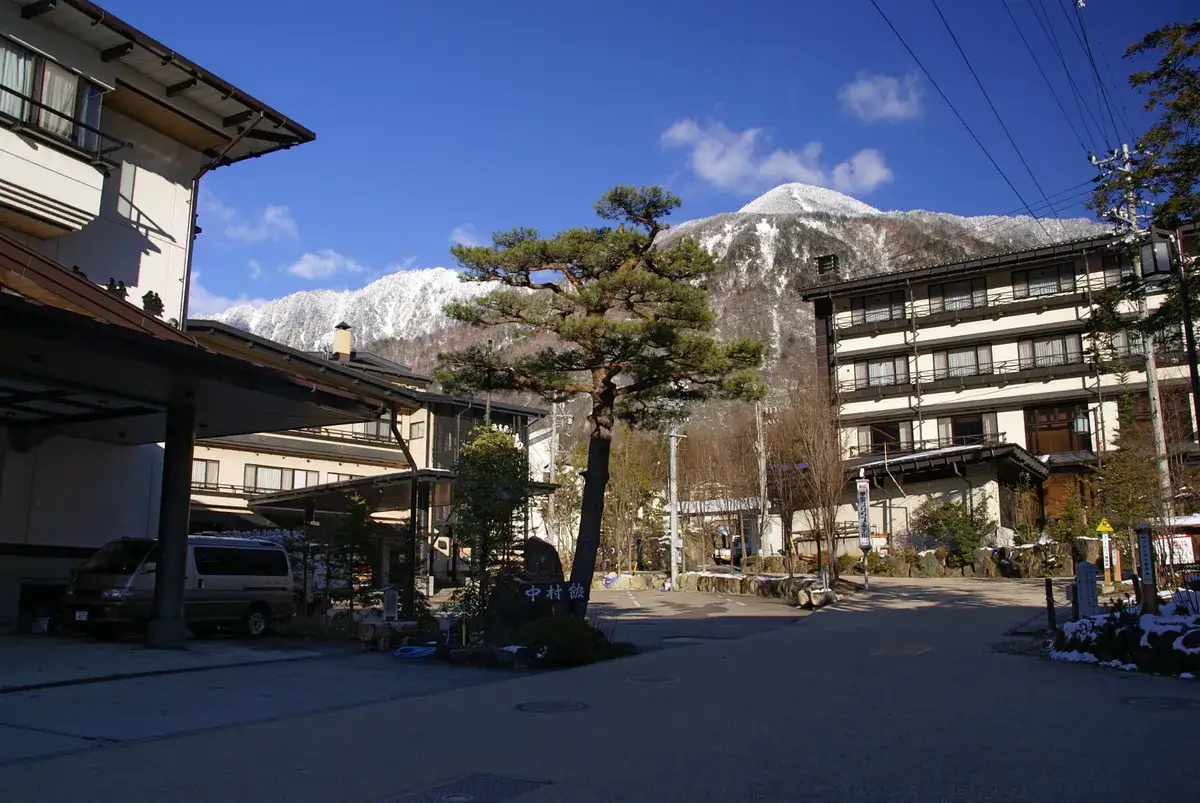
Archive view of Hirayu Onsen beneath snow-covered mountains; buildings and streets may have changed. · 663highland · CC BY 2.5 · Wikimedia Commons · Resized and converted to WebP
Some booking links may earn us a commission at no extra cost to you. How we fund this guide.
What is the main route from Nagoya to Okuhida?
Use Takayama as the gateway, then take the Nohi route toward Hirayu and Shinhotaka to the stop confirmed by your ryokan. The first decision is whether the Nagoya–Takayama leg works better by train or highway coach; both still require a separate mountain arrival plan.
JR operator information identifies Hida services linking Nagoya and Takayama. Nohi publishes a Nagoya–Takayama highway-coach route and the local Okuhida timetable. Read the current sources together rather than treating a convenient arrival in Takayama as proof the next connection is available.
Nagoya suits travellers already visiting central Japan or arriving on the wider railway network. If you are starting in Tokyo, compare the complete alternatives before committing to a detour through Nagoya. The best gateway is the one that fits the wider trip and a comfortable arrival.
Start with the Okuhida village overview if you have not selected a base. Hirayu and Shin-Hotaka are not interchangeable destinations, and the difference becomes important once you calculate the final bus journey and accommodation approach.
Should you choose the Hida train or highway coach?
Choose by the journey you prefer, the available reservation and the connection you need at Takayama. A rail preference is reasonable, but a train that arrives too late for the mountain leg is not a useful choice; the same applies to a coach with a poor onward connection.
| Option | Connection to plan | Practical question |
|---|---|---|
| Hida limited express | Takayama Station → Nohi Bus Center | Is there time to leave the station and board comfortably? |
| Reserved highway coach | Takayama coach arrival → local bus | Does road delay leave a workable alternative? |
| Overnight in Takayama | Next-day bus to Okuhida | Would a city night protect time at the ryokan? |
For rail, use the official booking service and confirm the exact departure, destination and seating conditions. Do not substitute an old rolling-stock description for current practical information about your train. If you have unusual luggage or mobility needs, ask the operator about the service you actually intend to board.
For the highway coach, confirm the Nagoya terminal as well as the Takayama destination. The operator’s route information distinguishes the relevant boarding location; a city label alone is not enough when you are planning a connection from an airport or another railway station.
Is Nagoya a better gateway than Tokyo or Matsumoto?
Nagoya is the stronger gateway when your trip already runs along the Tokaido corridor or when you want a Takayama stop before the mountains; Tokyo and Matsumoto suit travellers approaching from the east side of the Japan Alps. The right gateway is the one that removes unnecessary backtracking from the whole holiday.
Arriving from Kyoto or Osaka, Nagoya is a natural place to leave the main line, and the Hida route then carries you into the mountains without a return through Tokyo. For a trip that begins in Tokyo, compare the Tokyo-to-Okuhida routes and the Matsumoto approach before accepting a detour. Direct coaches into Hirayu from the east can remove the change in Takayama entirely, while the Nagoya route keeps Takayama as a built-in stop. Neither is universally better; they place the effort in different parts of the day.
How do you book the Nagoya-to-Takayama section?
Book through the appropriate operator and keep the reservation conditions together with the timetable. For the coach, the current Nohi route requires reservations. For rail, confirm the service and ticket arrangements through the railway’s official booking information.
Before paying, check the passenger count, date, departure place and arrival city. If you are arranging several family tickets, make sure the confirmation reflects the whole group and any seating requirements. Do not assume a child or infant can travel on the arrangement used by an adult; ask the operator when the category is unclear.
Record any payment or collection step that remains after reserving. Some booking workflows distinguish holding a reservation from completing the purchase. Keep the relevant confirmation accessible offline, along with the address of the boarding point rather than only the booking website’s homepage.
Book the final Okuhida arrival into your plan at the same time. It is frustrating to secure the preferred first leg and discover that it leaves too little time for the local bus or ryokan dinner. The first reservation should support the whole day.
What happens when you arrive in Takayama?
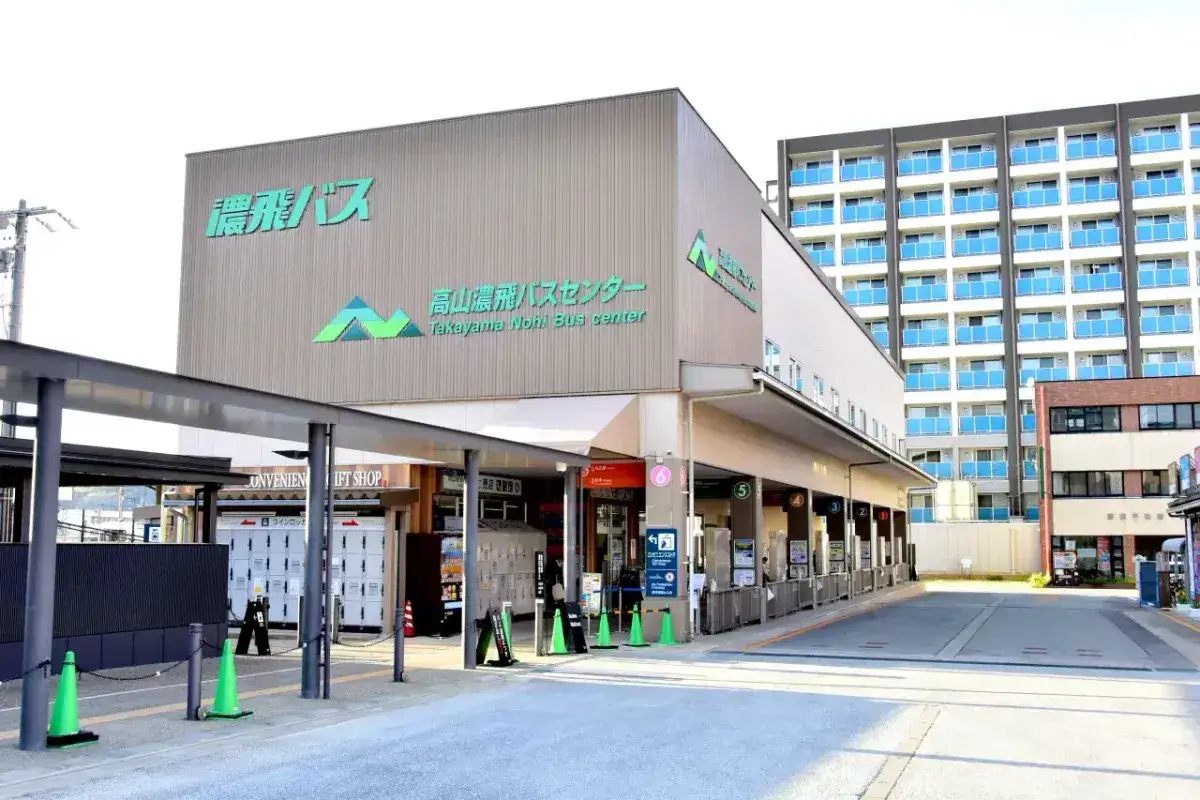
For rail arrivals, leave Takayama Station and locate Takayama Nohi Bus Center beside it, then confirm the local bus departure. Coach arrivals also need a deliberate switch from the long-distance service to the correct Okuhida departure; reaching the same general terminal area does not make the connection automatic.
Read the Takayama-to-Okuhida bus guide for the local process. Identify the bus that reaches your village stop, check its operating notes and retain a later workable option. You do not need to memorise every timetable row, but you should know what changes if the first connection is missed.
Allow practical time for toilets, a snack and sorting luggage if these are needed. The tightest theoretical transfer can look attractive on a planner while feeling uncomfortable for a group that has already been travelling for much of the day.
If you want to explore Takayama before heading into the mountains, treat it as a separate activity with a defined finish. Agree on the bus you will take and keep the accommodation’s arrival expectations in view. An open-ended city stop can quietly consume the time intended for the ryokan.
Which Okuhida stop should you choose?
Use the stop supplied by the accommodation, even when a different map result appears marginally closer. The Nohi route serves named villages and several local stops, while property entrances and collection arrangements vary. Exact arrival instructions are more useful than a broad regional address.
Check similar names carefully. Hirayu is the interchange village; Shin-Hirayu is a different accommodation area. A bus continuing toward the ropeway may pass the correct village but not stop at the point you assumed. Trace the selected service to the appropriate row.
Send the ryokan your intended bus and ask whether the stop and arrival fit. If collection is offered, obtain a meeting point and a delay procedure. If walking, ask about the entrance and route with luggage, especially when snow, rain or mobility needs could make a short approach more difficult.
The Hirayu village guide is helpful if you want a base around the interchange. Compare it with Shin-Hotaka if the ropeway and northern Okuhida are the focus of the trip rather than an onward journey toward Matsumoto.
Can you travel directly from the airport on the same day?
Assess the complete arrival chain before reserving a mountain stay on an international arrival day. You need a comfortable margin for flight delay, immigration, baggage, airport-to-city travel and the final reserved or local connection; the scheduled landing time is not your ready-to-depart time in Nagoya.
Start with the ryokan’s arrival arrangements and work backwards. If dinner is included, ask when the property needs you there. Do not assume it will serve a full late meal because your flight or earlier connection was delayed.
A night in Nagoya or Takayama can turn a pressured transfer day into a more comfortable trip. This is especially worth considering with children, older relatives or large bags. The purpose of the Okuhida stay is usually to enjoy the property, not simply arrive exhausted near bedtime.
If you choose the same-day journey, identify the point at which you would switch to a fallback city night. Keep accommodation contact details and booking conditions accessible so that a delay produces a clear decision rather than a series of improvised reservations.
How should you handle luggage on this route?
Plan for the least convenient part of the journey, which may be the final walk from a village stop rather than the train or coach. Ask each operator about oversized items and keep valuables, medicines and the essentials for children in a bag that stays with you.
Nohi publishes baggage guidance for its services, including shared storage limitations. Do not take a photograph of a large coach as evidence that unlimited suitcases will fit on every service. If the party has several large bags, ask directly before travel.
For a short Okuhida stay in a longer holiday, consider a smaller overnight bag if confirmed luggage storage or forwarding suits the itinerary. Check acceptance and delivery timing with the actual provider. Do not send important medicines or the only warm clothing ahead in a bag whose arrival has not been confirmed.
Within a group, count bags when changing vehicles and agree who manages each item. The person checking the timetable should not also be expected to track every suitcase and a child’s belongings while boarding.
What winter problems should you allow for?
Leave additional flexibility for the road sections and keep the sightseeing plan separate from the arrival plan. Both a highway coach and the local mountain bus can encounter road delays, and a train-led route still needs the road journey from Takayama.
Nohi’s Okuhida route page warns of substantial delays due to snow and congestion. Check the latest information before leaving Nagoya, then reassess the connection at Takayama if the day has changed. A planned late arrival may be less resilient than an earlier journey with time to spare.
Bring clothing suitable for waiting at stops, not only for heated vehicles and accommodation. Keep a power bank and offline directions accessible, and contact the ryokan promptly if the likely arrival changes. A specific update is more useful than repeatedly promising to arrive at the original time.
If you are considering collecting a vehicle instead, read the Okuhida car-hire guide first. Winter equipment, driver experience and hotel parking must all fit the route; hiring a car does not make mountain weather irrelevant.
How do you build a Nagoya, Takayama and Okuhida itinerary?
Treat it as a line with a clear start and finish rather than a loop: arrive in Nagoya, travel to Takayama, reach your Okuhida village, then leave toward Matsumoto or back through Takayama depending on your next destination. A line avoids spending time on the same stretch of mountain road twice.
Give Takayama a night if you want to see the town without compressing the ryokan stay. The Takayama and Okuhida itinerary shows how the two fit together, and the Japan Alps itinerary suits a longer crossing. If you hold a regional rail pass, compare it with the Takayama–Hokuriku pass guide and check the exact Nohi route you intend to use, because a pass that covers one leg may not cover the next.
Place the ryokan nights where the travel day is quietest. Two nights in the mountains usually reward the effort better than one, because arrival and departure mornings are otherwise consumed by transport. Decide this before booking the Nagoya leg, since it determines which day the long journey starts and how much margin you can protect for the 2026 season you are travelling in.
How do you plan an onward journey after Okuhida?
Choose whether you will return through Takayama or continue toward Matsumoto before fixing the rest of the holiday. A crossing itinerary can avoid retracing the same route, but only when the current bus services, checkout and onward reservations align.
Check breakfast and checkout against the morning departure you intend to use. A very early bus may reduce the time you have to enjoy the stay, while a late one may limit the next destination. The best compromise depends on whether the ryokan or the wider sightseeing route is the priority.
Keep the last mountain outing separate from a critical long-distance departure unless the timetable leaves a generous margin. Packing, retrieving bags and reaching the correct stop can take longer than an attraction-to-city route search suggests.
Finish with a one-page itinerary covering Nagoya departure, Takayama change, exact village stop and the onward direction. Confirm the remaining operational details from the official sources shortly before travel. That leaves your attention free for the journey once you are on the way.
How do you separate a Nagoya city stop from the mountain transfer?
Decide whether Nagoya is a place you want to visit or simply the gateway to the next leg. Both choices are reasonable, but mixing a sightseeing morning with a fixed onward journey needs a defined finish and enough time to collect bags.
If staying in the city first, confirm luggage storage with the accommodation and choose the departure before organising activities. Work backwards from the platform or coach terminal rather than leaving the last city stop at the same time the intercity service departs. Include walking, collecting luggage and finding the correct boarding area.
For a same-day through connection, keep optional errands modest. Buying a meal or dealing with a reservation can use more time than expected in an unfamiliar station. The best stop leaves you ready for the next stage without turning the day into a series of last-minute decisions. Once the Okuhida arrival is secure, city sightseeing can be given a separate, more relaxed place in the holiday.
Your questions, answered
Can I take a train directly from Nagoya to Okuhida?
Use a suitable train to Takayama, then continue by road to the chosen Okuhida village. The final Nohi Bus connection is an essential part of the itinerary. Confirm the exact stop with your accommodation before booking the train so that the scheduled arrival supports a comfortable mountain transfer.
Is the Nagoya highway coach reserved?
The current Nohi Nagoya–Takayama route information requires a reservation. Check the selected service, boarding terminal and payment or ticket instructions when booking. Treat the onward local bus as a separate journey with its own route information rather than assuming one reservation automatically covers the whole trip to the ryokan.
Should I spend a night in Takayama first?
Consider it when arriving late, after an international flight or with a group that benefits from a slower travel day. A city night can protect time at the ryokan the next afternoon. Compare that benefit with the extra hotel change, and choose a plan that fits your group’s pace.
Does a railway pass cover the mountain bus?
Do not assume a railway pass covers the local Okuhida route. Check the exact pass terms and bus operator before buying. Compare the journeys you will actually make, then use the appropriate official tickets or products for any section that is outside the confirmed coverage.
Can I continue from Okuhida to Matsumoto?
Compare the current Hirayu–Matsumoto service and its reservation instructions with your accommodation departure. A crossing itinerary can work well, but it is not guaranteed by the existence of a line on a map. Allow time for breakfast, checkout and travel from the property to the correct boarding point.
Can I travel from Nagoya to Okuhida in one day?
A same-day journey can work if the Nagoya–Takayama leg and the local bus connect with enough margin for your ryokan’s arrival deadline. Check each current timetable and the property’s dinner arrangements. If any stage leaves no buffer, or you are arriving after a long flight, an overnight in Takayama is the safer choice.
Is Nagoya or Matsumoto the better starting point for Okuhida?
Nagoya suits travellers already on the Tokaido corridor or planning a Takayama stop. Matsumoto suits eastern approaches and a crossing itinerary that finishes in Takayama. Compare each full connection to your village stop and your next destination instead of choosing by city name alone, and confirm the ryokan’s arrival deadline first.