Gifu, Japan · The Northern Alps
Okuhida Onsen-go guide 2026
Okuhida Onsen-go brings together five hot-spring villages in Takayama City, Gifu Prefecture. Choose a base by your preferred ryokan, bathing privacy and transport needs, then add Shinhotaka Ropeway or a seasonal Kamikochi outing. Give the inn time in the schedule instead of trying to visit every village.
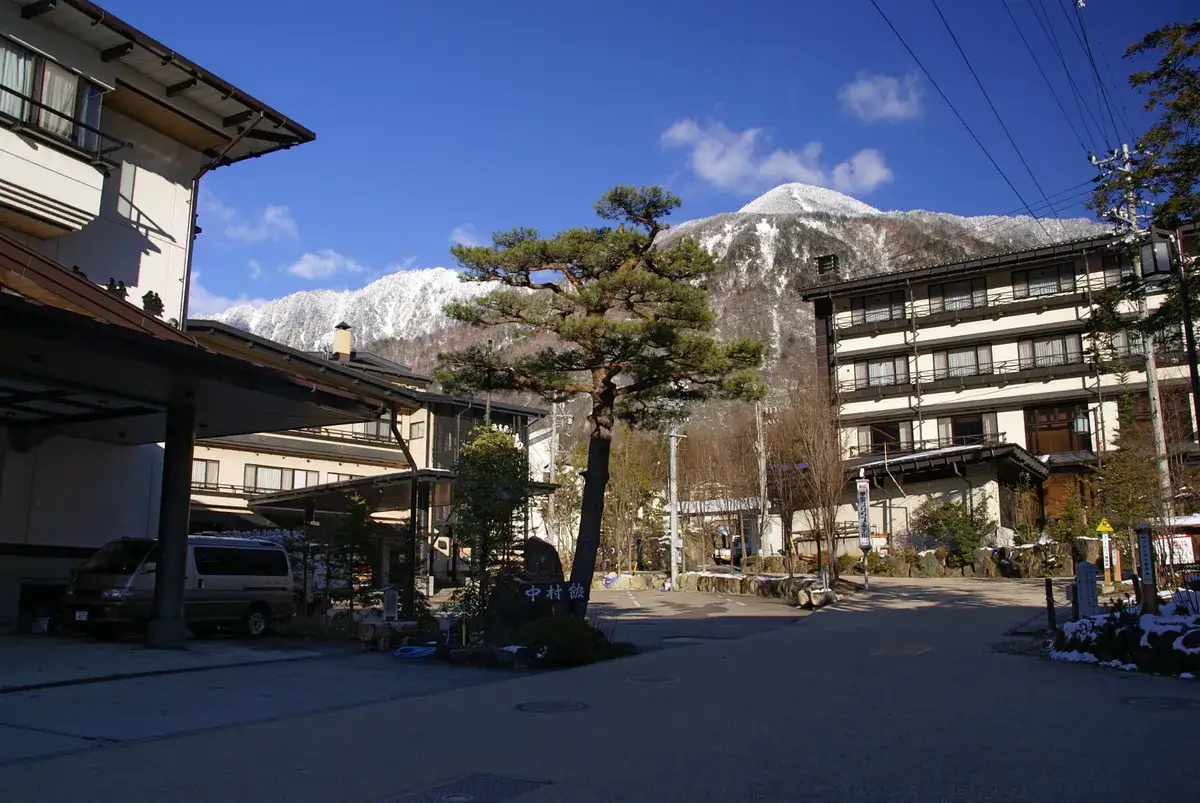
Archive view of Hirayu Onsen beneath snow-covered mountains; buildings and streets may have changed. · 663highland · CC BY 2.5 · Wikimedia Commons · Resized and converted to WebP
Five villages · start here
Choose your corner of Okuhida
Pick where you sleep first, then lock transport and add the ropeway or Kamikochi. Each village suits a different pace—some for connections, others for an inn-led evening.
Hirayu Onsen
A ryokan night with a transport-based itinerary
02Fukuchi Onsen
A room, bathing and dinner-focused stay
03Shin-Hirayu Onsen
A property-led stay on the valley route
04Tochio Onsen
A property-led alternative to large resort stays
05Shin-Hotaka Onsen
An inn-led stay with mountain sightseeing
Some booking links may earn us a commission at no extra cost to you. How we fund this guide.
What is Okuhida Onsen-go, and where should you begin?
Okuhida Onsen-go is a group of five hot-spring areas in the Japan Alps, within Takayama City in Gifu Prefecture. Begin by choosing the kind of overnight stay you want, then match a village and a transport plan to it.
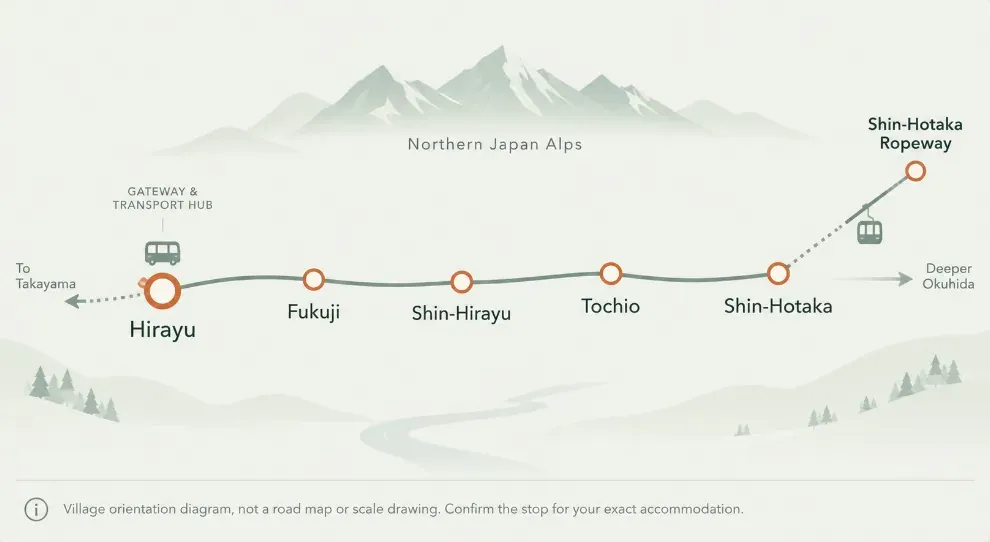
The five areas are Hirayu, Fukuchi, Shin-Hirayu, Tochio and Shin-Hotaka. You may also see Fukuchi written as Fukuji and the regional name written as Okuhida Onsenkyo. Those spellings describe the same regional planning landscape rather than additional destinations to fit into an itinerary. Save the Japanese property name and exact address whenever English spellings differ between a hotel listing and a bus timetable.
The useful question is not how to visit every village. It is where to spend your nights, which bathing arrangement suits you and which one or two excursions justify leaving the inn. Okuhida can be an onsen stop between cities, a base for seasonal Kamikochi access or a longer stay built around the mountain setting. Trying to do all three in one crowded night usually weakens each part.
This guide treats rooms, transport and attractions as connected decisions. The recommendations are planning judgements rather than accounts of tested stays. Current operation, property rules and the exact booking plan must still be checked with the relevant operator before you travel.
Which of the five villages best fits your trip?
Choose the village for the way you want to travel and the accommodation you actually want to book. Hirayu is a useful place to investigate for terminal-based connections; the other villages deserve comparison when a particular inn, setting or room arrangement has priority.
| Area | Start your research here if you want | Check before booking |
|---|---|---|
| Hirayu | A ryokan night organised around the bus terminal and a Kamikochi plan | Exact room, arrival walk and seasonal onward service |
| Fukuchi | An inn-focused afternoon, bathing and dinner | Room category, private-bath arrangement and recommended stop |
| Shin-Hirayu | A property-led choice on the valley corridor | Building layout, meals and the full place name on directions |
| Tochio | A smaller-stay alternative worth comparing | Actual facilities, evening meals and riverside access conditions |
| Shin-Hotaka | A mountain-setting stay with a flexible ropeway outing | Distance to the ropeway, last approach and operation notices |
For the terminal-centred option, read the Hirayu Onsen village guide. It explains why an easy bus plan can be more valuable than choosing a room first and discovering the arrival afterwards. The Shin-Hotaka Onsen guide helps with the opposite decision: prioritising an inn and the mountain setting while checking the exact location carefully.
The Fukuchi Onsen guide suits travellers who want the accommodation to fill a proper part of the afternoon and evening. Shin-Hirayu has a range of property styles to investigate. Tochio is worth considering for a simpler stay, without assuming it will always produce a particular booking result. None of those descriptions establishes the facilities of an individual inn.
For a group, list essential needs before picking a village. A bed rather than a futon, avoiding stairs, a confirmed dietary arrangement or a particular type of bath may narrow the choice more usefully than scenery alone. Once those needs are clear, the village decision becomes a practical comparison instead of a competition between photographs.
Should you sleep in Okuhida or stay in Takayama?
Sleep in Okuhida when the inn, bathing and a slower evening are important parts of the holiday. Sleep in Takayama when town sightseeing, rail access and a more flexible city programme are your priorities, or combine both bases with time for the transfer.
A Takayama room and an Okuhida ryokan are not interchangeable places from which to do an identical itinerary. If you stay in town and visit the valley for the day, your return transport limits the evening. If you sleep in Okuhida, dinner and bathing can become the focus, but you must organise the arrival around the property’s requirements.
The strongest combined plan gives each place a role. Use Takayama for the town days and the railway connection, then move to Okuhida with a manageable amount of luggage and a clear afternoon. Avoid arriving late at an inn after trying to complete the entire town sightseeing list. A meal-inclusive reservation often has an arrival routine that is different from an ordinary city hotel.
Check the following morning too. An early train departure from Takayama may make a final night in town more comfortable. The time you gain by sleeping closer to the departure point can be worth more than squeezing one extra bath into the end of the trip. Choose your final base from the onward journey as well as the scenery.
How do you choose an Okuhida ryokan without getting lost in room labels?
Compare the exact room and meal plan, not just the property name. Start with sleeping arrangement, bathing privacy, meals, access and the arrival deadline, then check the details that matter to your party directly with the inn.
Use the Okuhida ryokan comparison as the regional starting point. A shortlist spanning the five villages is useful when you have a clear requirement and remain open to the location. The Hirayu ryokan guide narrows that search for a transport-centred stay, while the Shin-Hotaka ryokan guide helps organise a mountain-inn comparison.
Names you may encounter include Miyama Ouan, Mozumo, Hirayukan, Hirayu no Mori, Yumoto Choza, Kakurean Hidaji and Yarimikan. Their names are research starting points, not a claim that each includes the same facilities. One property’s room categories may differ substantially, and a photograph of a premium room should not be treated as an illustration of every booking plan.
Ask what is included and write the answer beside the room category. Check whether meals are part of that plan, whether the party can use the bathing arrangements and how you reach the room. For stairs, seating and bedding, specific questions produce more useful answers than asking whether a property is generally suitable for families or older travellers.
What is the difference between a private onsen and an outdoor bath?
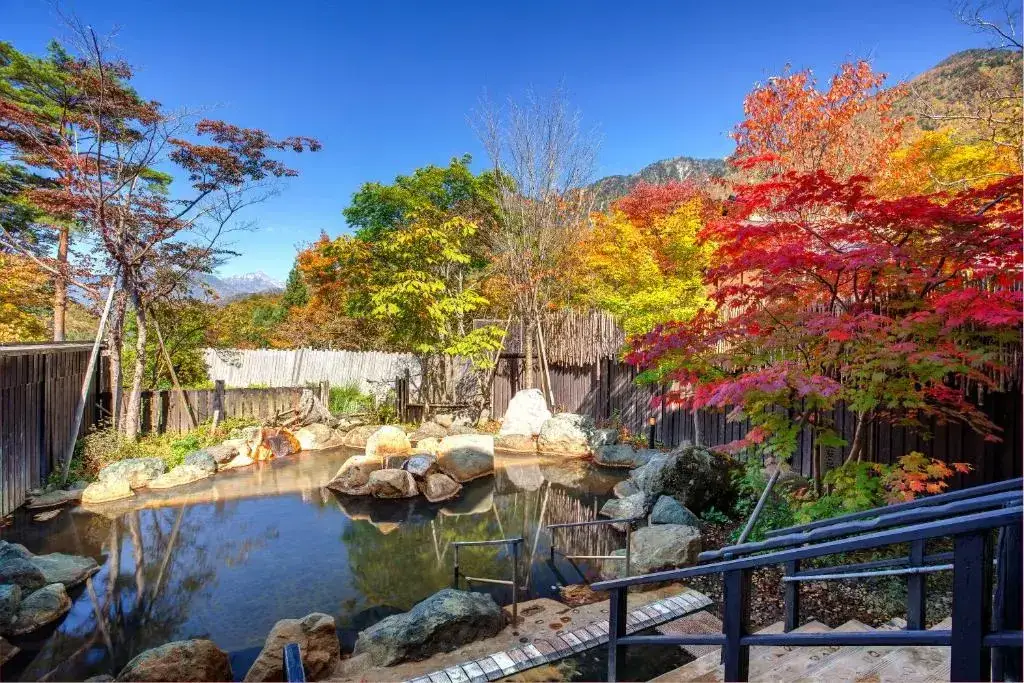
Private describes who uses a bath; outdoor describes its setting. A room bath, a shared bath reserved for private use and a communal outdoor bath are different arrangements, so check which one your chosen plan actually includes.
The private-onsen planning guide is particularly useful if privacy is a main reason for choosing Okuhida. For an attached bath, confirm the water source, enclosure and access from the room. For a shared private-use facility, ask when reservations are made, how sessions work and whether your preferred time can be guaranteed.
Rotenburo does not imply exclusive use. A private bathroom filter on a booking website also does not prove there is an attached hot-spring bath. Ask the property to describe the exact category in plain terms, especially when people in the party have different comfort levels about communal bathing.
Tattoo rules need their own confirmation. Do not assume a private bath means every facility at the property welcomes tattoos. Ask about the people and baths involved and keep the answer with the reservation. Likewise, check children’s access and any rules about bathing together rather than interpreting another guest’s account as permission for your own party.
How do you get to Okuhida from Takayama?
Plan the Nohi Bus journey to your property’s recommended stop, then confirm the final walk or transfer. Takayama Nohi Bus Center is the gateway to investigate for the valley route, with Hirayu and the Shinhotaka corridor shown in the operator’s information.
Our Takayama to Okuhida bus guide explains how to read the route and prepare the connection. Use the official timetable for your date rather than relying on a copied service time in an old article. Check the service column, stop pattern and seasonal notes together; a line on a route map does not establish that every departure follows the same plan.
Keep the accommodation’s dinner deadline visible as you choose the bus. Include time to find the stop, manage luggage and complete the last approach. Nohi warns that road conditions and traffic can cause delays, so avoid a booking plan that works only if every minute goes perfectly.
Save the property name in Japanese, its address and a contact method offline. Ask the inn which stop to use even when an online map suggests a nearby alternative. A pickup, if needed, should be agreed for the exact service and party size. These small confirmations are more useful on arrival than a long list of attractions you might not have time to visit.
Can you arrive from Matsumoto, Nagoya or Tokyo?
Yes, but compare complete journeys to the inn rather than choosing the fastest-looking first train. Matsumoto offers an eastern approach to investigate, while Nagoya and Tokyo can fit different rail and highway-bus combinations depending on the rest of your trip.
For Nagoya, begin with the railway or highway-bus approach to Takayama and then add the valley bus. For Matsumoto, check the operator’s actual cross-mountain connection and the transfer at Hirayu where needed. For Tokyo, compare the route through Matsumoto with approaches using Takayama, paying attention to the final arrival rather than only the first long-distance stage. The tourism association’s access page is a useful overview, and current operator information should establish the date-specific services.
Choose fewer fragile connections if the group includes children, older travellers or several large bags. A slightly longer journey with a comfortable transfer can be a better holiday than a tightly timed route that leaves everyone anxious. Check which parts require reservations and what happens if an earlier stage is delayed.
Do not make an international flight arrival and a meal-inclusive ryokan dinner depend on the same tight sequence unless the whole journey genuinely allows room for disruption. A gateway night can simplify the following day and make the Okuhida reservation easier to enjoy.
Is Shinhotaka Ropeway worth building your trip around?
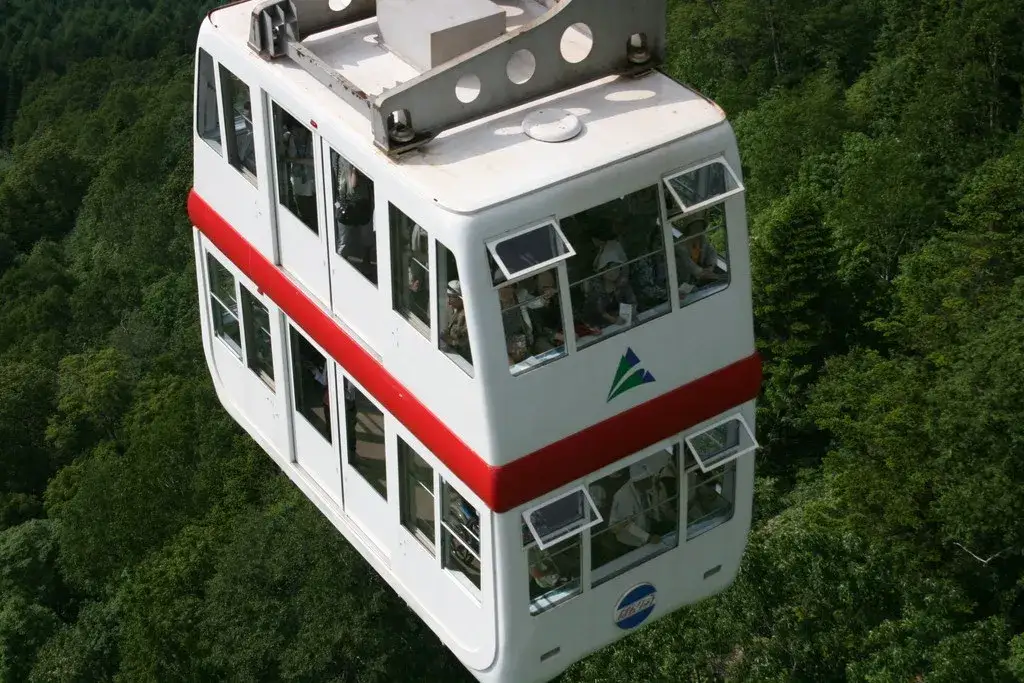
Build in time for it if a gondola ride and the mountain views appeal, but leave room to change the day around operation and visibility. Treat it as an attraction with its own conditions, rather than a guaranteed panorama included with an Okuhida hotel booking.
The Shinhotaka Ropeway visitor guide covers the attraction, while the route from Takayama to the ropeway separates a direct sightseeing trip from a stay elsewhere in the valley. Check the return bus and the last practical descent independently. Reaching the lower station before the ropeway closes does not establish that you can still make the bus or dinner you need.
The operator’s official notices are the place to check suspensions, maintenance and facility access. Strong wind can affect operation independently of how pleasant the lower valley feels. Paths around a station need separate attention; an operating gondola does not mean every surrounding walk is available.
Bring clothing suitable for standing outdoors and agree the amount of walking in advance. Sightseeing at a station and continuing onto an alpine route are different activities with different requirements. If the weather removes the view, choose a suitable alternative or spend more time at the inn rather than improvising a hike beyond the party’s preparation.
How does Kamikochi fit into an Okuhida itinerary?
Treat Kamikochi as a separate seasonal excursion, with Hirayu as an important connection to investigate. Decide whether to visit from an Okuhida inn or sleep inside the valley according to how much time you want there and the transport available on your dates.
The Kamikochi from Okuhida guide explains the planning relationship. Do not assume an inn promoted as a Kamikochi base is inside Kamikochi itself. The actual journey, morning departure and return remain part of your day, and a meal-inclusive stay needs the evening deadline protected.
Kamikochi’s ordinary visitor season is broadly from mid-April to mid-November, with exact access and services requiring confirmation for the year and date. Private cars, including rental cars, cannot simply be driven into the valley; follow the official parking-and-transfer guidance for your approach. A navigation destination at Kappa Bridge is not a route permission.
For a one-night onsen stop, avoid forcing Kamikochi and the ropeway into the same day. With more time, give each a main outing slot and move them if the conditions change. If walking in Kamikochi is the highest priority, consider whether spending a night there gives you more of the experience you actually want than another transfer back to an inn.
What changes between autumn, winter and the green season?
Plan around the activities and access available on your dates, rather than a single best season for the entire region. The conditions in a village, at a ropeway viewpoint and on a mountain path can differ within the same day.
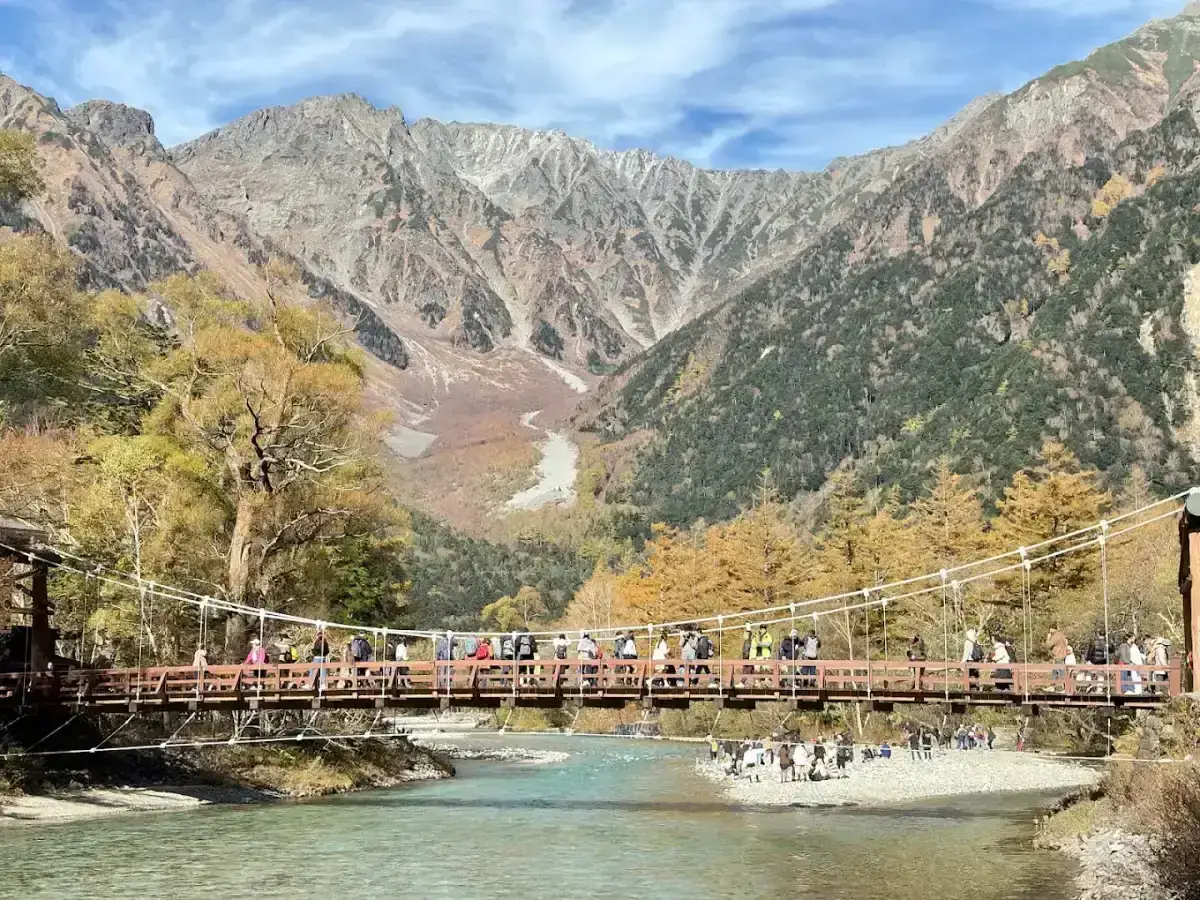
Autumn is a reason to keep the route flexible rather than promise a particular foliage peak. Colour varies with elevation and conditions. Select the dates that fit your wider trip, then use current local information to choose where to spend the day. A photograph of bright leaves records one visit, not a schedule the landscape will repeat precisely.
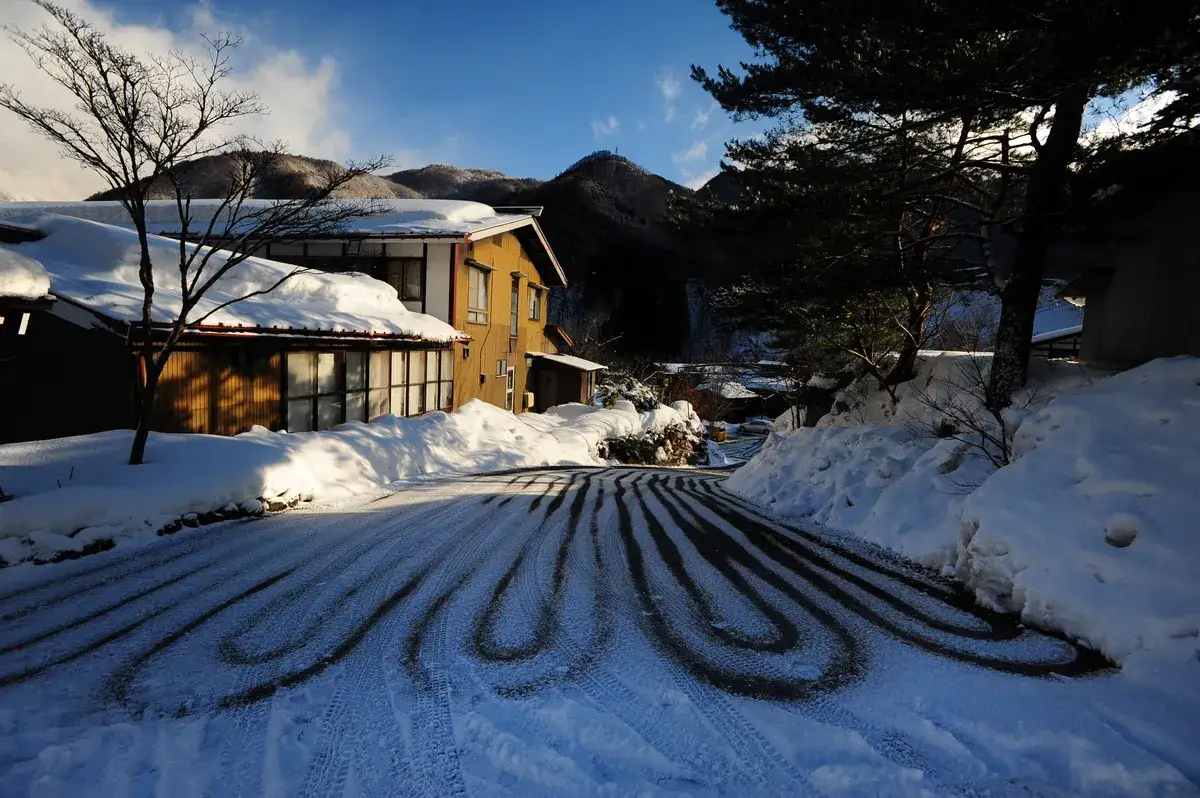
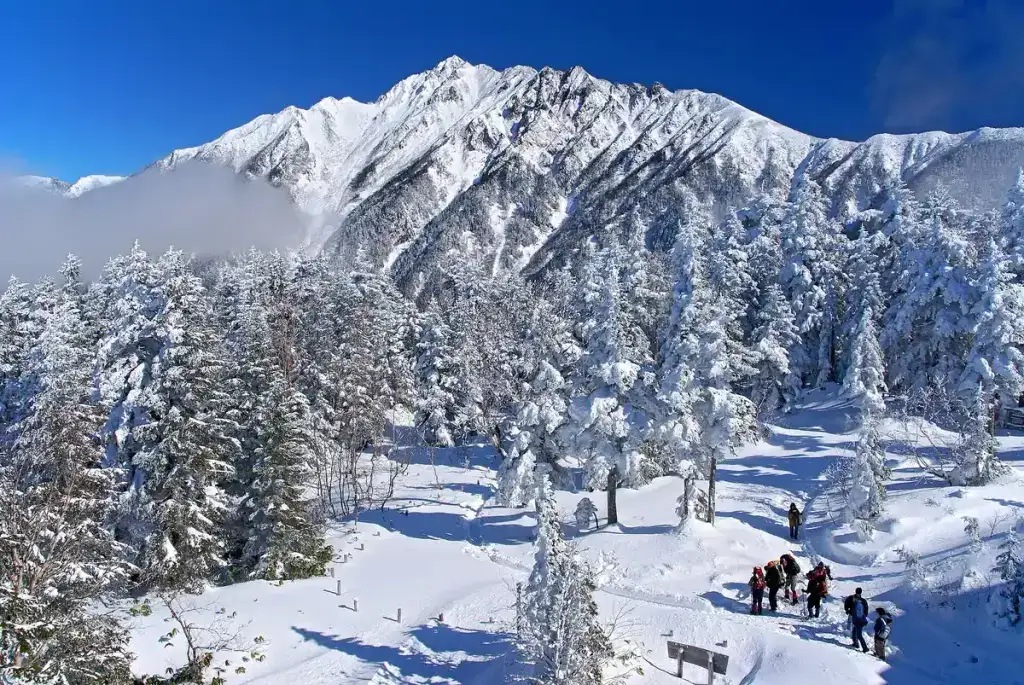
Winter puts more emphasis on arrival, road information, footwear and time indoors. Verify each attraction and outdoor bathing facility separately. Snow in a promotional photograph is not a guarantee of either the scene or the access route. For drivers, discuss equipment and the actual route with the rental company, and confirm the inn’s final approach.
During the green season, do not confuse a pleasant village afternoon with suitable conditions for every walk. Rain, river conditions and mountain weather still matter. Keep one main excursion per full day, use the operator’s current notices and choose an accommodation you will enjoy if a planned outdoor activity needs to change.
Do you need a rental car, or can you use the valley buses?
A car is a choice to assess against the actual itinerary, not a requirement implied by the mountain setting. A bus-based stay can work when the property and excursions line up; a car may add flexibility for another plan while bringing its own road and parking questions.
For public transport, think in terms of complete outings from the inn and back. Check the stop, first useful departure, last comfortable return and any transfer. Do not use the final service as your preferred connection when an earlier return provides a sensible margin.
For driving, separate the main approach from the accommodation entrance, attraction parking and restricted roads. Kamikochi’s private-car rules still apply, and the ropeway’s parking arrangements can vary seasonally. Ask about each part rather than assuming a rental car removes the need to research access.
Walking between villages also needs route-specific judgement. The official Shinpi Trail guidance recommends a bus between Fukuchi Onsen Bus Stop and Hirayu Bus Terminal because there are no sidewalks and heavy traffic. A small-looking gap on a map is not evidence of a comfortable foot connection.
How many nights should you spend in Okuhida?
One night can be enough for an inn-focused introduction; two nights make a full excursion and an unhurried second evening easier. Add more time when the room, meals and local plans support it rather than because a regional itinerary assigns a fixed quota.
For one night, arrive with an afternoon, enjoy the accommodation and decide the next morning around breakfast, checkout and luggage. For two nights, use the full day for the ropeway or Kamikochi, subject to conditions. Ask the inn how meals and daytime room access work for consecutive nights before assuming every routine remains identical.
A longer Japan Alps itinerary should also protect departure day. If your onward journey has an important reservation, consider a gateway night or a generous margin after the local bus. Moving the final sleep location can simplify the trip more than adding another activity.
Keep the schedule legible for everyone travelling. A plan that fits on one page, with the essential services, property contact and chosen outing, is easier to use than a collection of competing route screenshots. Leave the optional list optional so a slow breakfast or changed forecast does not feel like falling behind.
What should you confirm before reserving your stay?
Confirm the details that can change the decision: the exact room, bath, meals, arrival and needs of the people travelling. Once those are clear, save the answers with the reservation and recheck operational information closer to departure.
For meals, distinguish allergies from preferences and ask about ingredients used in stocks and sauces. Vegetarian, seafood-free and halal requirements are different requests; no general Okuhida food description establishes that an inn can meet them. Accept a clear limit from the kitchen and choose a suitable plan rather than relying on an on-arrival change.
For families or mixed-age groups, check bedding, stairs, seating and the route to the bathing area. Ask about child access and private-use facilities if those matter. For luggage, confirm storage and collection rather than assuming a terminal or hotel will accommodate every bag and schedule.
Then check current transport and attraction notices once more. Keep the correct stop, Japanese property name and contact method available offline. With those foundations settled, the stay can revolve around the part that brought you to Okuhida: time in a well-chosen inn, a bathing arrangement you are comfortable using and a mountain outing that fits the day.
Your questions, answered
What are the five Okuhida Onsen-go villages?
The five hot-spring areas are Hirayu, Fukuchi, Shin-Hirayu, Tochio and Shin-Hotaka. Fukuchi is also written Fukuji in English sources. All belong to the wider Okuhida planning area, but accommodation and transport should be checked by exact address and recommended stop rather than the regional name alone.
Which Okuhida village is best for a first visit?
Start with Hirayu if terminal-based connections are the main concern, then compare other villages when a particular inn or room arrangement matters more. There is no single village that fits every traveller. Sleeping, bathing, meals and the final arrival are more useful decision points than a general ranking of atmosphere.
Can I visit Okuhida without a rental car?
A bus-based itinerary can work if the date-specific Nohi services, accommodation location and chosen outings align. Ask the property for its recommended stop and final approach. Check the full return journey for each excursion and allow time before dinner or a long-distance departure, rather than assuming a route map is enough.
Should I visit Kamikochi and the ropeway on the same day?
Giving them separate main outing slots is usually easier to organise when you have enough time. Each has its own transport and operational constraints, and Kamikochi also has seasonal access. A compressed combination can leave little time to enjoy either place or the ryokan evening you have booked.
Does every Okuhida ryokan have a private outdoor onsen?
No. Check the exact room category and distinguish an attached hot-spring bath from a shared bath reserved for private use. Outdoor does not mean exclusive use, and a private bathroom filter does not establish an onsen. Ask the property to confirm the arrangement and rules that apply to your party.
How many nights are enough in Okuhida?
One well-planned night can give you time for the inn, bathing and dinner. Two nights add a full day for an outing and a second evening without moving bags. Choose the length from your wider route and the room experience you want, while leaving room for changed conditions and a comfortable departure.
Is Okuhida suitable for children or older travellers?
Choose the property and plan around the people travelling. Check bedding, stairs, bathing access, meals and the final approach in specific terms. A family-friendly label or a room capacity does not establish that every detail suits your group. Confirm essential needs directly before completing the reservation.